
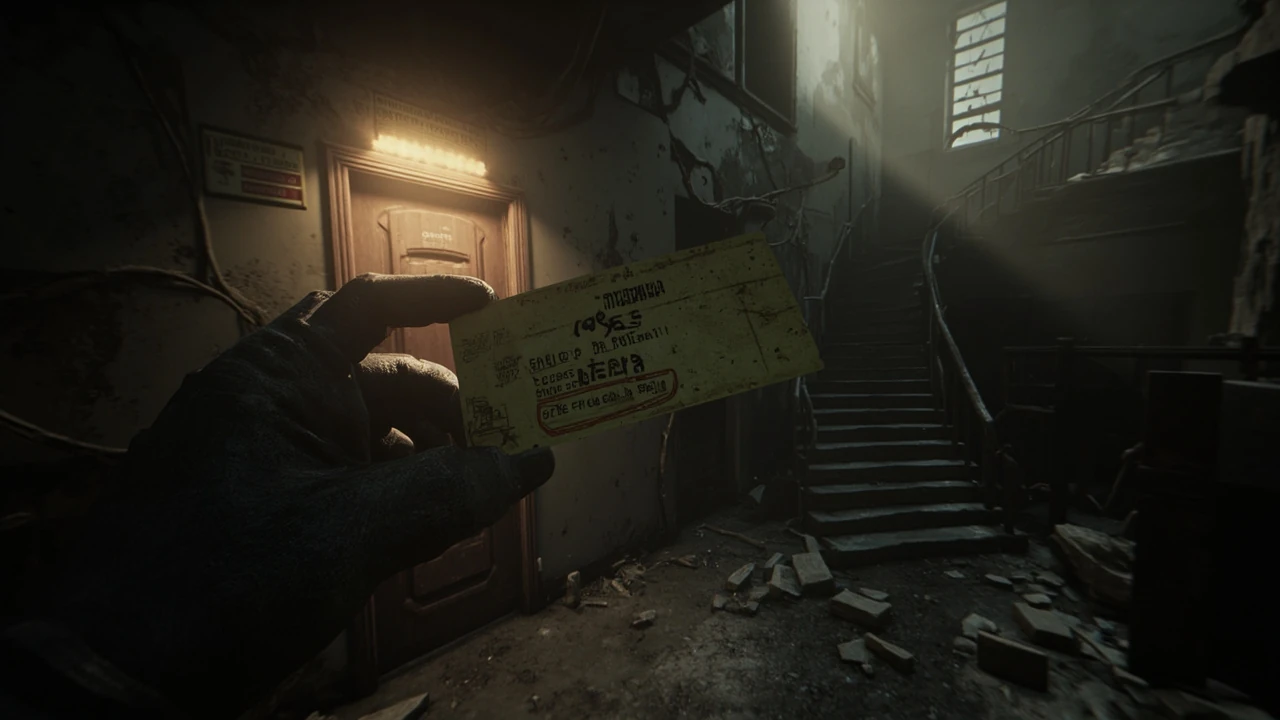
JKV employee access card: the key most players miss in Buried City
The JKV employee access card is one of the more confusing keys in ARC Raiders because, unlike most map markers in the game, it does not point you to a specific named POI. It tells you a company, J Kozma Ventures, and a job, opening a door, but the building itself is buried under a generic label. Most players pick the card up during a routine sweep, then stare at their map wondering where to take it.
The card opens a single locked door on the fourth floor of the Space Travel building in the Buried City map, and the room behind that door is one of the better contained loot nodes in that area. The challenge is reaching the right floor, knowing what to breach, and surviving the rest of Space Travel while you loot. This guide walks through where to find the door, what is behind it, how the surrounding POI works, and how the card fits into a broader Buried City route.
What the JKV employee access card actually unlocks
Functionally, the JKV employee access card is a single-use key item. It does not grant a permanent ability, it does not unlock multiple doors across the map, and it does not act as a crafting material. When you interact with the matching door prompt, the card is consumed and the room becomes a normal container space you can loot at your own pace on subsequent runs, provided you reach the door again.
The room behind the door is a small corporate office on the top floor of Space Travel, and the design suggests it was a private workspace rather than a public area. That detail matters because the loot mix inside is biased toward components used in mechanical and electrical crafting, which lines up with the kind of work a J Kozma Ventures employee might plausibly have been doing when the world ended.
Why this key feels different from other ARC Raiders keys
Most key items in ARC Raiders are tied to a named POI. You read the description, you check the map, and the destination is obvious. The JKV employee access card breaks that pattern in three ways.
- It names a corporation rather than a landmark, which is not how Buried City POIs are labeled.
- It does not include a floor number, so even players who recognize the company name have to figure out which room they actually want.
- Its value depends on understanding Space Travel as a multi-floor building with several locked rooms, not a single open floor.
Those three quirks are why a card that looks like a throwaway pickup ends up being one of the more interesting keys to plan around in a full Buried City run.
Where to use the JKV employee access card in Buried City
The card is used at the Space Travel building, a large multi-story structure on the Buried City map. The locked door is on the fourth floor, set in a hallway by the northwestern stairwell. From the outside, Space Travel looks like any other office block, but its interior is unusually tall, with a clearly marked stairwell that makes vertical navigation easier than in most Buried City POIs.
Before you commit to a full run, it helps to understand how Space Travel sits inside Buried City’s overall layout, because the building is rarely empty.
Approaching Space Travel from different spawn directions
Buried City is dense, and the direction you spawn from changes how risky a Space Travel run feels. Three practical approaches tend to come up in player planning.
- From the north or northwest: you can usually enter through the ground floor and use the interior stairwell to climb straight to the fourth floor, avoiding the exterior zipline.
- From the south or east: the exterior zipline along the building’s wall is a faster route up, but it is exposed and visible from neighboring rooftops.
- From a contested perimeter: treat Space Travel as the last stop on a longer route, loot the lower floors first, then push up once you have cleared or at least checked nearby rooftops.
None of these routes is strictly correct, and the right choice depends on where the rest of your squad is, what your team composition can handle, and how aggressive the current lobby is feeling. The card is more valuable than a typical key, so it is usually worth building your route around it rather than squeezing it into an unrelated plan.
Reaching the fourth-floor door: stairwell vs. zipline
There are two reliable ways to reach the fourth floor of Space Travel, and the building supports both. The interior stairwell sits in the corner of the structure, with each floor clearly marked, so it is hard to overshoot the level you want. The exterior zipline runs along the outside wall and offers a faster climb at the cost of exposure.
Stairwell route
The stairwell is the safer default. It keeps you inside the building, which means you are behind walls and out of sightlines from most external positions. The trade-off is that you are committed to the building once you enter, because retreating down four flights of stairs under pressure is slower than sliding down a zipline.
For solo players or small groups, the stairwell tends to be the better choice unless you already know the building is empty.
Zipline route
The zipline is the speed option. It is useful when you are racing another squad to the room, when you want to reach the top floor without alerting anyone on the lower floors, or when you need to disengage quickly after looting. The risk is that zipline users are visible from surrounding buildings and from the open areas around Space Travel, so a sniper on a nearby roof can turn a fast climb into a quick death.
Most players use the zipline either to enter the building when the lower floors are obviously hot, or to exit after grabbing the JKV room loot, especially if they hear another squad on the stairs.
What’s inside the locked room
Once the JKV employee access card is consumed, the room reveals a dense cluster of containers in a relatively small space. The loot mix is biased toward crafting components, with a small chance at a higher-tier reward if you are lucky.
Container loot
The room is dominated by Mechanical Components and Electrical Components, the two resource families used for most mid-tier crafting in ARC Raiders. Most of the containers are sealed, so you will need to spend time breaching them rather than just opening lids. That breaching time is the main reason the room is rewarding but risky, because it is the loudest activity in the building.
Rare drops
On a lucky run, the room can also contain a weapon case and a raider cache. These are not guaranteed, and treating the room as a guaranteed source of high-tier loot will lead to disappointment, but the upside is real. The combination of reliable component income and a small chance at a case or cache is what makes the room worth a dedicated trip rather than a side detour.
| Loot type | Reliability | Best use | Risk when looting |
|---|---|---|---|
| Mechanical Components | Common, found in most containers | Crafting mechanical gear, mid-tier mods | Breaching noise, low |
| Electrical Components | Common, found in most containers | Crafting electrical gear, electronics-based mods | Breaching noise, low |
| Weapon case | Uncommon, room-dependent | Direct weapon or weapon mod rewards | Mid, draws attention if squad is near |
| Raider cache | Uncommon, room-dependent | Miscellaneous high-value loot | Mid, similar to weapon case |
The components are the floor of the room’s value. The case and the cache are the ceiling. Plan your expectations around the floor, and treat anything above it as a bonus that justifies the trip on its own.
Space Travel as a POI: what to expect around the locked door
Space Travel is one of the busier POIs in Buried City, partly because the building is large, partly because it sits in a convenient central location, and partly because the JKV room gives it a guaranteed reason to visit beyond generic loot. A few characteristics are worth understanding before you commit.
Traffic and player density
Because the building is large and has multiple loot nodes, you will frequently run into other players, even on off-peak lobbies. Most encounters happen on the lower floors, where the loot is more evenly spread, but squads that hear breaching on the fourth floor will sometimes push up the stairwell. Plan for at least one contact per run during peak hours.
Sound and sightlines
Breaching containers is the loudest action in the room, and the hallway layout means sound carries into the stairwell. If you are breaching and another squad is on the third floor, they will probably hear you before you see them. Conversely, if you hear a long breaching sequence above you, the JKV room is almost certainly occupied. The visual sightlines are tighter than the audio ones, with most long views blocked by interior walls, which is why sound is usually your first warning.
Extraction considerations
Extraction points in Buried City are spread around the map, and Space Travel is close enough to several of them to make a quick run viable. The catch is that leaving the building with a full inventory of components makes you a target in the open ground between Space Travel and the nearest extract, so many players either pre-plan an extract near Space Travel or move through side routes to avoid being chased out.
How to plan a full Buried City run around the JKV employee access card
The card rewards planning, because the door is on the top floor of a busy building and the loot behind it is component-dense rather than instant gratification. A clean run usually has three phases.
Phase 1: Approach and clear lower floors
Before you climb, it is worth clearing or at least checking the lower floors of Space Travel. Most contested fights in the building happen on floors one through three, and pushing up the stairwell into an active squad is one of the most common ways a JKV run ends badly. Take a few minutes to loot the bottom floors, listen for movement, and only commit to the climb when the stairwell feels quiet.
Phase 2: Climb and breach
Once the lower floors are quiet, choose your route up. Stairwell for safety, zipline for speed. Reach the fourth floor, find the hallway by the northwestern stairwell, and start breaching. Because the room is small, the breaching sequence is shorter than in some other component rooms, but it is still the loudest part of the run.
Phase 3: Extract with a full inventory
After the containers are open, your inventory will probably be heavier than when you arrived. Decide on an extract before you start breaching if you can, and avoid leaving through the main entrance if you heard gunfire earlier. Side exits and quieter routes are worth the extra walk.
| Run phase | Main goal | Biggest risk | Best mitigation |
|---|---|---|---|
| Approach and clear | Confirm lower floors are safe | Stairwell ambush | Listen, check corners, do not rush the climb |
| Climb and breach | Reach the JKV room and open containers | Squad pushing from below or above | Stairwell for safety, zipline for speed, watch both directions |
| Extract | Leave with components intact | Being chased out into open ground | Pre-planned extract, side exits, avoid main entrance under fire |
Common mistakes when using the JKV employee access card
Most failed runs come down to a small set of recurring mistakes. Naming them makes them easier to avoid.
- Sprinting straight to the fourth floor without checking lower floors, then getting pinched between a stairwell squad and the locked door.
- Using the zipline in plain sight of a sniper on a nearby roof and losing the card before reaching the door.
- Breaching containers without first deciding on an extract, then losing the components in a panic run to the closest exit.
- Treating the room as a guaranteed weapon case, which sets the wrong expectations and makes the run feel wasted when only components drop.
- Forgetting that the card is consumed on use, so using it on the wrong door or the wrong floor burns the key for the rest of the session.
None of these mistakes are exotic. They are the kind of decisions that look fine in the moment and only feel costly after the run is over. Slowing the climb down by even thirty seconds usually fixes most of them.
How the JKV room compares to other component rooms in Buried City
Buried City has several good component rooms, and the JKV space is not the largest of them, but it has a specific profile that makes it stand out.
Reliable but contained
Unlike sprawling component rooms that spread across an entire floor, the JKV room is small enough to clear in a single sitting. That is a feature, not a bug, because a smaller room means less wandering and less exposure time, which matters in a busy POI like Space Travel.
Component-focused, not weapon-focused
Many component rooms are balanced between weapon parts and crafting resources. The JKV room leans heavily toward Mechanical and Electrical Components, with weapon and cache drops as a bonus. Players who need components for a specific crafting goal will find this room more reliable than rooms that gamble on weapon parts.
Requires a key, which filters traffic
The card requirement is a built-in filter. Players who do not have the card cannot open the room, which means the door occasionally slows down how many squads can loot the space. It does not make the room empty, but it does mean a careful player who times their run well can usually avoid walking into a third party inside the room itself.
Solo vs. squad play in the Space Travel JKV run
The card works in both solo and squad play, but the dynamics differ.
Solo considerations
Solo players benefit from the smaller room, because they can clear it quickly and avoid the kind of extended fights that punish a single operator. The main risk is being overwhelmed by a squad that pushes the stairwell mid-breach, so listening carefully and being ready to disengage is more important than raw loot speed.
Squad considerations
Squads can split tasks, with one player breaching while another watches the stairwell and a third holds the zipline. The card still only opens the door once, so the squad should decide in advance who triggers the door to avoid burning the card on a misclick. Component distribution in a squad run is also worth thinking about ahead of time, because the room can fill a lot of inventory slots very quickly.
| Play style | Strength in this room | Main weakness | Recommended adjustment |
|---|---|---|---|
| Solo | Fast clear, low overhead | Vulnerable to squad pushes | Listen, breach quickly, avoid extended fights |
| Duo | One breaches, one watches stairs | Limited cover if surprised | Assign roles before climbing |
| Squad | Layered defense, faster breach | Inventory management | Pre-plan loot distribution, one player triggers the door |
Fitting the JKV run into a broader ARC Raiders session
The card is best treated as a route anchor rather than a side errand. Because the Space Travel building is busy and the room is component-dense, it is usually more efficient to plan other Buried City objectives around the JKV run than to slot the run into a generic loot path.
Players who treat Space Travel as their main stop and use the surrounding blocks as supporting loot tend to get more value from the card than players who treat it as a quick detour on the way to a different POI. The room rewards a deliberate pace, because the breaching noise and the busy POI both punish rushing, and a slow run that extracts with a full component inventory is usually worth more than a fast run that extracts with a partial one.
For more on planning routes through dense maps like Buried City, the breakdown of how supply drops work in ARC Raiders is a useful companion read, because both involve timing, contested POIs, and decisions about how long to stay in one place.
Frequently asked questions
Where exactly is the JKV employee access card used in ARC Raiders?
The card is used at the Space Travel building in the Buried City map, on a locked door on the fourth floor. The door is in a hallway near the northwestern stairwell of the building.
Do I need the JKV employee access card to enter Space Travel at all?
No. Space Travel is a public POI with multiple floors and several loot areas that do not require a key. The card only unlocks the specific locked room on the fourth floor.
Is the JKV employee access card consumed when I use it?
Yes. Using the card on the matching door consumes it, so you cannot reuse the same card on subsequent runs. You will need to find another copy to reopen the room in later sessions.
What is the best loot inside the JKV room?
The reliable loot is Mechanical and Electrical Components, used for crafting. On a lucky run, the room can also contain a weapon case and a raider cache, but those are not guaranteed.
Should I take the stairwell or the zipline to the fourth floor?
Take the stairwell for safety, especially in solo or small-group play. Take the zipline for speed, especially when racing another squad or trying to disengage quickly after looting.
Is Space Travel a busy POI in Buried City?
Yes. Space Travel is one of the more active POIs in Buried City because it is large, central, and has multiple loot nodes, including the JKV room. Expect at least one encounter per run during peak hours.
Can I open the JKV room containers quietly?
No. Most containers in the room are sealed and require breaching, which is loud. Sound is the main reason other squads can locate you while you are looting the room.
Is the JKV employee access card worth a dedicated run?
Yes, especially when you need a steady supply of Mechanical and Electrical Components. The room is small, contained, and reliably stocked with crafting resources, with a small chance of a high-tier drop on top.
What should I do before breaching the JKV room containers?
Decide on an extraction point, check the stairwell and zipline for movement, and make sure your inventory has space for a full room of components. Breaching is loud, so a quick pre-empt of your exit path saves time under pressure.
Does the JKV employee access card work the same in squad play?
Yes, the card works the same regardless of team size, but squads should decide in advance who triggers the door to avoid accidentally consuming the card on a misclick, and plan component distribution before breaching so the run ends cleanly.
Leave a Reply