
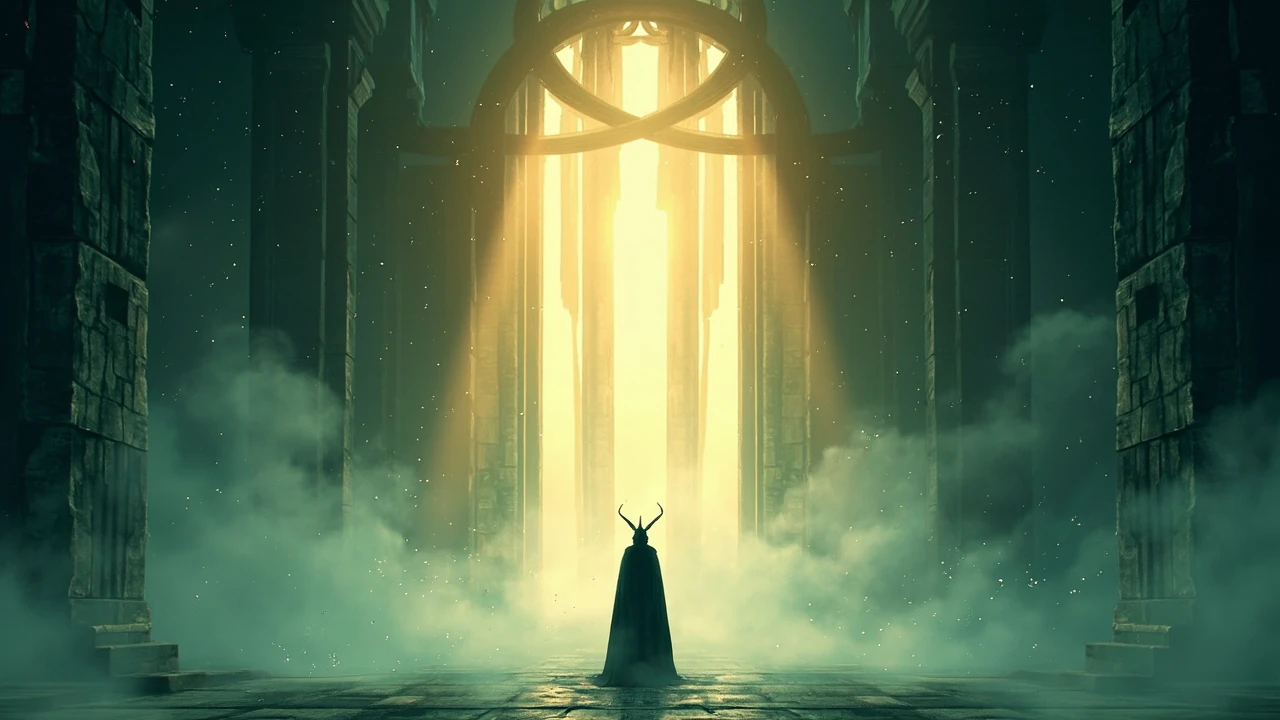
My missing brother Silksong: how Hornet’s search is framed
The phrase my missing brother Silksong is shorthand for a quest that has been central to Hollow Knight: Silksong since the project was first announced. Players who finished Hollow Knight know the Knight as the silent vessel they guided through Hallownest. The opening of Silksong turns that relationship inside out: the player now controls Hornet, the protective needle-wielding weaver who guarded Hallownest’s ruins in the first game, and her immediate objective is to find a missing sibling figure who is implied to be one of the many vessels that never escaped the Abyss.
For developers, writers, and anyone interested in how Team Cherry structures a sequel, that framing is more important than the specific plot beats that surround it. The “missing brother” quest is the structural backbone that drives map traversal, ability gating, and a large share of the early-game dialogue. It also tells us how Team Cherry thinks about player onboarding: the previous game ended on a quiet, ambiguous note, and the sequel opens with a direct, character-led reason to move. This article walks through what the quest is, how it has been described in public material, how it fits into Silksong‘s world, and how it should be read in the context of the wider Hollow Knight canon.
What the “missing brother” quest actually is in Silksong
In the public-facing description that has accompanied Silksong since its 2019 reveal, Hornet is described as a “hunter” and a “warrior” who has been “captured and brought to a distant land” before being “freed and forced to embark on a deadly quest to the kingdom’s peak.” The narrative spine added to that description, and reinforced in trailers and demo footage, is that Hornet is looking for a lost sibling figure while she climbs the kingdom of Pharloom. Community discussion often shortens that storyline to “my missing brother,” a phrase that mirrors the way Hornet is expected to address the absent vessel in at least one early in-game interaction.
Three things are useful to keep clear about this framing:
- The quest is a narrative engine, not a literal sub-quest tab. There is no “Missing Brother” entry in a journal or quest log; the search is conveyed through dialogue, environmental storytelling, and the way new regions are introduced.
- It is the primary lens for Pharloom’s worldbuilding. Every new biome Hornet passes through on her way to the Citadel is presented as a clue, a witness, or a misdirection related to her sibling’s disappearance.
- It is also a structural callback to the Knight’s journey. Where the first game sent the player down into the Abyss to learn the truth about the vessels, the sequel pushes Hornet upward toward the Citadel, which sits on top of Pharloom.
For developers reading Silksong as a case study, that structure is the real interest. The “missing brother” line is what lets Team Cherry tie world exploration, tutorial pacing, and emotional stakes to a single goal that the player can hold in their head without any UI reminders.
Where the quest sits in the wider Hollow Knight timeline
To understand why Hornet’s search has so much weight, it helps to place it against the timeline of the first game. The events of Hollow Knight end with the player character either containing the Radiance inside themselves, consuming it, or rejecting it, depending on which ending they trigger. The Knight’s fate is intentionally left open. The Pale King, the dreamers, and most of the higher-order cast of the original game are gone, dead, or sealed away by the time the credits roll.
That leaves Hornet in an unusual position. She is one of the few named, fully-realised characters from Hallownest who can plausibly act as a sequel protagonist. She is also one of the few characters with a direct, emotional tie to the vessels. Hornet’s protection of Hallownest’s broken siblings in the first game was not generic heroism; she was watching over a graveyard of children who were never given a chance to grow up. When Silksong‘s opening frames her as a hunter who is looking for a missing family member, the writing is using the longest thread the series has already laid down.
Players who want the deep lore context can review the Hollow Knight Wikipedia article, which collects the basic timeline, the endings, and the cast that Silksong builds on. What the wiki does not do, and what Team Cherry has also avoided doing in public, is spell out the precise identity of the missing brother. The deliberate restraint is itself part of the design.
How Pharloom’s design supports the quest
Pharloom is built vertically, in contrast to Hallownest’s mostly horizontal, branching layout. Hornet climbs through a sequence of named regions: the Mosslands, the Bone Bottom, the Marrow, Deep Docks, the Far Fields, and onward toward the Citadel at the peak. Each of those areas has its own distinct fauna, music, and traversal rules, and each one escalates the difficulty in a way that mirrors Hornet’s narrowing options as she gets closer to her goal.
The “missing brother” framing explains why the world is arranged that way. If Hornet is searching, the player has to be allowed to search everywhere, but the pacing has to be controlled. Team Cherry solves this by tying new traversal tools to specific regions, so that the player physically cannot backtrack efficiently without the right ability. The act of searching for a missing sibling is therefore expressed through the act of unlocking new movement, which is one of the more elegant design choices in the game.
A few specific design signals are worth noting:
- Region gates are themed around family and memory. The Marrow’s bone architecture evokes the ossified dead of Hallownest, while the Far Fields introduce a wider, more open sky that contrasts with the claustrophobic spaces of the Knight’s old kingdom.
- NPC density increases as Hornet climbs. The first major settlement is Bone Bottom, a refugee camp of bugs who have fled lower regions. That placement reinforces the idea that Hornet is moving through a society that has been displaced, and that her search is being conducted in a world that has already been unsettled.
- Music and ambience carry the quest more than dialogue does. Christopher Larkin’s score has always done a lot of narrative work, and Silksong leans on it more heavily. Regions associated with the missing brother tend to introduce a recurring musical motif that the player only consciously recognises after a few hours.
What Team Cherry has actually confirmed about the quest
It is important to separate confirmed material from extrapolation. Team Cherry’s public statements about Silksong have been relatively few, especially since the project’s extended development cycle. The information that can be treated as confirmed, based on the original announcement page, official trailers, the Hollow Knight: Silksong announcements page, and the verified coverage linked from IGN’s Silksong differences and new features guide, which provides useful background for this point., includes:
- Hornet is the playable protagonist.
- She has been captured and brought to Pharloom, a kingdom ruled by silk and song.
- She is searching for a missing higher being and is fighting her way to the kingdom’s peak.
- Pharloom is populated by a cast of around 150 bug characters, many of whom are hostile.
- Combat has been expanded with a wider moveset, more tools, and a quest-based crafting system.
- The game is being developed for PC and consoles, with a long-promised but repeatedly delayed release window.
What has not been officially confirmed in writing is the precise identity of the missing brother, the length of the main quest, the full map layout, the role of the Citadel’s rulers in the plot, or any details about the endings. Any article that treats those points as fact, including speculation about how the quest resolves, should be read with that in mind.
How the quest changes the way combat feels
The “missing brother” framing is not just a story device. It changes how combat is taught. In Hollow Knight, the Knight’s motivations are deliberately thin. The player learns to fight because the enemies are there, and the narrative weight is added through environmental storytelling and rare NPC encounters. Hornet’s quest is the opposite. She is looking for someone, she has a reason to fight, and her toolset reflects that motivation.
Hornet’s moveset is built around a more aggressive, mobile combat style than the Knight’s. Her needle, thread, and ranged tools reward positioning and timing rather than patience. From a development perspective, the design decision is to let the quest’s emotional direction show up in the controller. A character who is searching for a missing family member does not creep forward; she throws herself into danger, then uses silk to escape it. That design is most obvious in the way aerial combat and downward strikes are emphasised in the early game, and it is the cleanest example of how a narrative premise can shape combat tuning without needing a single line of explanatory dialogue.
Useful combat signals players can watch for when reading the quest beats:
- New traversal abilities are introduced in regions where the missing brother’s trail is supposed to be strongest, so that the player’s mechanical vocabulary grows alongside Hornet’s understanding of what she is chasing.
- Boss fights in Silksong are denser and more aggressive than the Knight’s, and several are framed as trials Hornet must pass to prove she is “worthy” of approaching the Citadel. That framing feeds directly into the missing brother quest by raising the cost of every mistake.
- Healing and resource management are tuned so that a player who has been searching for a long time without finding their target will be running low on the materials that allow safe exploration. The mechanical pressure mirrors the narrative pressure.
Quest tracking, journals, and the choice to keep the goal implicit
One of the more interesting decisions in Silksong‘s design is what it does not do. The game does not present the missing brother quest as a literal journal entry with waypoint markers, completion percentages, or a checklist. There is no in-game equivalent of a quest tracker pointing at the next story beat. Instead, the quest is communicated through fragments: short dialogue lines, environmental cues, item descriptions, and the way NPCs react when Hornet enters a new area.
For developers, this is a deliberate counter-trend move. Modern action-adventure games often overload the player with quest markers, minimap pings, and HUD reminders, on the assumption that a player who does not know what to do next is a player who will stop playing. Team Cherry’s approach treats the player’s imagination as part of the system. The player is meant to remember, between sessions, why they are climbing, because the game does not keep reminding them.
That choice has a few practical implications:
- World geography becomes a memory aid. Because the player has to keep the quest in their own head, the regions are designed to be visually distinct enough that the player can navigate by recognition rather than by following a marker.
- Backtracking is reframed as continued searching. Returning to a previously visited area is not framed as “completing a quest step.” It is framed as Hornet returning to a place she already passed through, in case there is a clue she missed.
- Save points and benches function as quiet confirmation. Sitting at a bench is one of the few moments where the game visibly acknowledges the player is still on the trail. The bench animations, the small ambient sounds, and the bench’s placement at the edges of regions together form a low-key confirmation that the quest is still active.
How the missing brother quest compares with similar sequel hooks
It is worth comparing the “missing brother” framing to how other action-adventure sequels have introduced their player character. The table below summarises some of the most common patterns, with Silksong placed alongside three well-known examples. The comparisons are structural, not stylistic; they are meant to show how Hornet’s search fits into a broader set of design choices.
| Game | Protagonist relationship to the previous cast | Driver of early exploration | Tracking style |
|---|---|---|---|
| Hollow Knight: Silksong | Former supporting character now promoted to protagonist | Searching for a missing sibling figure while climbing to the Citadel | Implicit; no journal markers, story carried by dialogue and ambience |
| Metroid Dread | Returning bounty hunter with a long-established arc | Investigating a distress signal on a remote planet | Mostly implicit, with a small HUD cue for major story beats |
| God of War (2018) | Returning protagonist now defined by his role as a father | Honouring a dead partner by scattering ashes from a peak | Linear main path with side quests tracked in a journal |
| Halo 2 | Split narrative across two returning protagonists | Preventing a galactic activation triggered by a known antagonist | Mission-based, with explicit mission objectives on the HUD |
The point of the table is not to declare one approach better than another. The point is that Silksong‘s choice to keep the missing brother quest largely off the HUD is unusual for a 2020s action-adventure title, and it is a meaningful design decision on Team Cherry’s part. It also explains why the game is being so closely watched by developers interested in low-UI storytelling.
What players new to the series should understand before starting
Players who arrive at Silksong without playing Hollow Knight first will not be locked out of the game, but they will miss a large part of the emotional weight behind the missing brother quest. The relevant context, in order of importance, is roughly:
- The Knight’s journey through Hallownest and the three primary endings.
- Hornet’s role as the protector of the broken vessels in the Abyss.
- The Pale King’s experiment, the Void, and the cost paid by the vessels who were never given names.
- The Dreamers, the Radiance, and the way the original game ends on a quiet, ambiguous note rather than a triumphant one.
None of this is required to mechanically enjoy Silksong. Combat, traversal, and item collection all work without that background. But the missing brother quest is structured to land harder when the player already knows what Hornet is searching from, not just what she is searching for. For a developer or writer thinking about sequel design, that is the lesson: a strong hook for a returning player can feel like background noise for a new one, and the way the team bridges that gap will determine how widely the quest resonates.
What is still unknown, and what would change the picture
Several pieces of the missing brother quest are still officially open. The clearest list, based on what has and has not been shown in public material, looks like this:
| Open question | What we know | What would resolve it |
|---|---|---|
| Identity of the missing brother | Implied to be one of Hallownest’s vessels, framed as a family member of Hornet | Official narrative documentation or a post-release developer interview |
| Whether the quest has multiple endings | Multiple endings would fit the series’ pattern; nothing is confirmed | The game itself, or a verified description of its ending set |
| How the Citadel’s rulers are involved | Pharloom’s peak is the destination; the Citadel’s leadership is hostile but not fully described | Pre-release developer commentary or in-game lore fragments |
| The exact release date and platform parity | PC, Nintendo Switch, and other consoles are targeted; the date has shifted several times | An official release announcement from Team Cherry |
| Whether the Knight appears in any form | The Knight is not confirmed as a playable character, but the series leaves that open | In-game evidence, or a verified statement from the developers |
Each of these questions is worth waiting on rather than guessing at. They also matter to anyone using Silksong as a reference point for their own design work, because the answers will determine whether the missing brother quest is remembered as a clean, focused through-line or as a hook that opens more narrative threads than it closes.
Why the missing brother framing matters beyond Silksong
For developers and writers, the most useful thing about the missing brother quest is what it teaches about sequel structure. Hollow Knight ended on a quiet, melancholic note. The Knight’s story was effectively over. Silksong had to start somewhere, and the choice the team made was to anchor the new game not on the player character from the original, but on a character who was defined in the original by her relationship to the player character. That is a small but meaningful inversion. It lets the new game feel like a continuation without requiring the original protagonist to be revived, resurrected, or rebooted.
It also gives the new game a built-in emotional question. The Knight’s story in Hollow Knight is about what a hollow, named-less creature does when it is given a kingdom and then asked to give it up. Hornet’s story in Silksong is about what a protective, fully-realised character does when she is told that one of the creatures she protected may still be alive. Those are different questions, and they produce different games. The missing brother framing is what bridges them without forcing the sequel to retell the first game’s story.
A short list of the design lessons a developer can take from that choice:
- Sequels do not have to start where the previous game ended. They can start from a different character’s relationship to the same event, and still feel like a continuation.
- A simple, repeatable phrase can carry a lot of design weight. “My missing brother” is a four-word line, but it provides worldbuilding, motivation, and emotional stakes all at once.
- Restraint is a design tool. The team has not over-explained the quest in pre-release material, and that restraint is part of why the hook is so widely discussed.
How the quest has been received in public previews
The public reaction to the missing brother framing, both when the game was first revealed in 2019 and after subsequent public demos, has generally fallen into three patterns. First, returning players read the line as an emotional callback to the Abyss, and to the vessels they chose to leave behind. Second, players who had not finished Hollow Knight read the same line as a generic “find the lost relative” setup, which made the early marketing look less distinctive than it actually is. Third, developers and writers used the framing as a reference point when discussing how to introduce a sequel protagonist without retconning the previous game.
That third pattern is the one that has stuck. Articles and talks about narrative design frequently cite Silksong‘s opening as a textbook example of a sequel that respects its predecessor’s ending while still opening a new story. The missing brother quest is a compact illustration of that idea, which is part of why a single line from a 2019 announcement page is still being discussed in 2026.
Reading the quest as a player in 2026
Anyone starting Silksong today should expect the missing brother quest to feel quieter than the marketing suggests. There will be no on-screen waypoint, no checklist, and no clearly telegraphed “next step.” There will be a sequence of regions, a sequence of NPCs who either know something or are hiding something, and a recurring motif in the music and item descriptions that the player will only consciously recognise after several hours of play. That is the design, and it is intentional.
For players who are used to modern action-adventure games carrying a heavy UI, the early hours of Silksong can feel disorienting. The fix is to slow down, talk to NPCs more than once, read item descriptions, and trust that the next region will be revealed when the previous one has given up its information. The quest is meant to feel like a search, and a search does not always know where it is going.
A simple checklist for new players who want to follow the quest without an external guide:
- After each major region, return to Bone Bottom and speak to every named NPC, even if they appear to repeat the same lines.
- Collect every map fragment and every journal entry, even if they do not obviously advance the main story.
- Pay attention to recurring musical motifs; the same theme appearing in two unrelated regions is a strong signal that the quest is being moved forward.
- Treat benches as checkpoints in the search, not just as healing stations; the bench placement itself is part of the quest’s pacing.
- Do not assume that the first NPC who mentions the missing brother is the one who knows the most. Silksong distributes information across the cast on purpose.
Closing notes on a quest that is still unfolding
The phrase my missing brother Silksong is more than a search query. It is shorthand for a design choice that has held up across years of pre-release coverage: a sequel that promotes a supporting character to protagonist, and lets that character’s relationship to a lost family member drive a kingdom-sized world. Whether the quest resolves in a way that satisfies the years of expectation is something only the finished game can decide. What is already clear is that Team Cherry built the structure of Silksong on that one line, and that the structure still holds together under close reading.
For developers, the practical takeaway is that a single, well-chosen narrative premise can do a lot of work. Hornet’s search for a missing sibling is the reason the player climbs, the reason the world is vertical, the reason combat is aggressive, the reason the music is structured the way it is, and the reason the UI is restrained. If any one of those systems were redesigned without the missing brother framing, the rest of the game would have to be redesigned with it. That is the level of integration a good quest hook is supposed to reach, and Silksong is one of the cleanest recent examples of it.
Frequently asked questions
Who is the missing brother in Silksong?
The missing brother is presented in Silksong‘s opening material as a sibling figure Hornet is searching for while she climbs Pharloom. Public descriptions imply that the figure is connected to the vessels of Hallownest from the first game, but Team Cherry has not officially confirmed the precise identity, and the game is structured to reveal that information gradually through dialogue and environmental storytelling rather than through a direct exposition dump.
Is the missing brother the Knight from the first Hollow Knight?
It is plausible, given the shared setting and the way the Knight’s fate is left open in Hollow Knight‘s endings, but it has not been officially confirmed. The “brother” framing in the marketing is consistent with a vessel rather than with the Knight specifically, and any answer that treats the Knight as definitively the missing brother should be treated as community interpretation rather than fact.
Does Silksong tell you where the missing brother is?
Not directly. The quest is structured to be implicit, without quest markers or a journal entry pointing to the next story beat. The player is expected to follow the search through dialogue, environment, and item descriptions rather than through a map marker. Returning to NPCs and re-reading item text are reliable ways to keep track of the search.
How long is the missing brother quest in Silksong?
Team Cherry has not published a precise length for the main quest, and public previews have not provided a confirmed runtime. The game is designed as a full sequel rather than as a DLC, and the missing brother quest is the spine of the entire campaign, so players should expect it to run across the full playtime rather than to be confined to a short opening sequence.
Do you need to have played Hollow Knight to understand the missing brother quest?
Mechanically, no. Silksong is designed to be playable without having finished the first game. Narratively, however, a lot of the emotional weight behind the missing brother framing depends on knowing what Hornet was protecting in Hallownest and what the vessels went through. Players who want the full effect should at least read a summary of Hollow Knight‘s plot before starting.
Is the missing brother quest the only storyline in Silksong?
No. The missing brother framing is the main quest’s structural spine, but Silksong also includes a wider cast of NPCs, a quest-based crafting system, and a set of side activities that develop Pharloom independently of the central search. The two strands are designed to coexist; the side content gives the world texture, while the main quest gives the world direction.
Will the missing brother quest change how combat feels compared to the first game?
Yes, and that is by design. Hornet’s needle, thread, and toolset are tuned around a more aggressive, mobile combat style than the Knight’s, and the early-game difficulty curve is built to communicate that she is searching with urgency. The combat feel is part of how the quest is told, not just a separate system layered on top of the story.
What happens if you cannot find the missing brother?
Because the quest is implicit, players occasionally worry that they have “missed” the main storyline. In practice, the game will not let a player complete the campaign without engaging with the missing brother thread, because every region gates new traversal tools behind the same beats that advance the search. The most common cause of a player feeling lost is that they have not spoken to a specific NPC after a specific event; returning to the last settlement and exhausting dialogue usually fixes the issue.
Is Silksong’s missing brother quest a spoiler for the first game?
Knowing that Hornet is searching for a missing family member in the sequel does not, by itself, spoil Hollow Knight‘s endings. The detail that lands hardest for returning players is the context behind the search rather than the identity of the brother, so the quest can be discussed in general terms without giving away how the first game resolves.
Where can I follow official updates on the missing brother quest?
The most reliable sources are Team Cherry’s official channels, the Hollow Knight: Silksong announcement page, and coverage from established outlets such as IGN’s Silksong differences and new features guide, which provides useful background for this point. Community wikis and forums are useful for tracking interpretation, but they should not be treated as primary sources until their claims are confirmed by Team Cherry.
Leave a Reply