
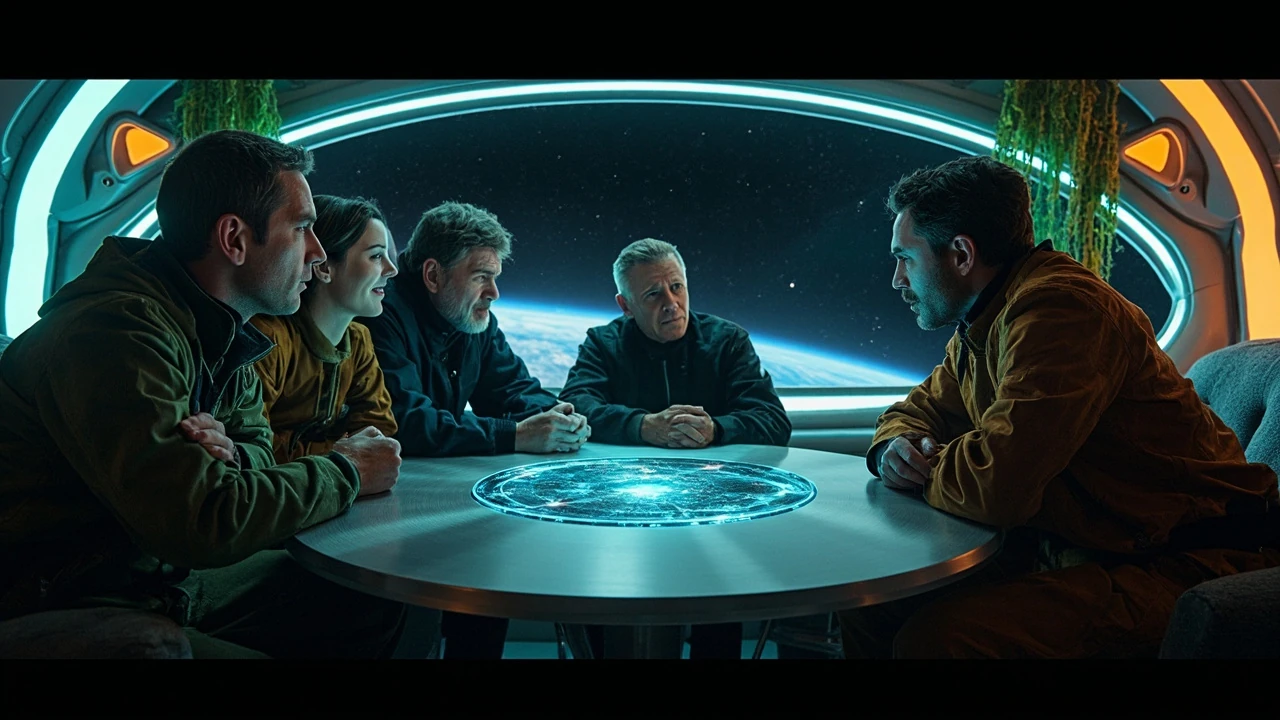
Starfield romance options
Starfield romance options are limited to four Constellation companions who join you through the main quest, and each relationship follows the same underlying structure: build fondness, trigger a companion-specific mission, and commit before the end of your playthrough. Bethesda tied every romance route to a central plot character, so the mechanics are approachable, but the choice of partner shapes the dialogue, a personal quest arc, and the ending variants your crew can reach. This guide walks through each available companion, explains how fondness actually works in practice, and covers the design decisions that separate Starfield’s relationship model from earlier Bethesda titles such as Skyrim and Fallout 4.
Understanding the system matters even if you only plan one playthrough. The rules around fondness determine which dialogue choices raise or lower a companion’s opinion of you, which missions unlock the romance arc, and which restrictions apply once you commit. If you have already finished the main story or are weighing whether to start a new save, the sections below explain the time investment, the practical limits, and the differences between pursuing each Constellation member.
How Starfield’s romance and affinity system works
Companion relationships in Starfield run on a hidden fondness score. Every Constellation member tracks their personal opinion of you independently, and your actions during dialogue, exploration, and combat nudge that score up or down. When the score crosses an internal threshold, the companion offers a personal mission. Completing that mission unlocks the flirt options, and a second threshold later opens the path to commitment. The system is not a meter you can see, so the practical signal is the companion’s dialogue tone and the appearance of their personal quest in your mission log.
Several design choices are worth understanding before you start a playthrough:
- Only the four Constellation members are romanceable. Recruitable crew you meet through the story, such as certain named crew on the frontier, do not have full romance arcs.
- You can fully commit to only one companion per playthrough. Other companions will reject a romantic advance, and the system locks the chosen partner in for the remainder of that save.
- Fondness is shaped by repeated actions over time, not by a single decisive choice. A pattern of aligned behavior matters more than one critical answer.
- Romance progress is gated by main story progression, because the personal missions appear after you have integrated the companion into Constellation and traveled with them enough.
This structure comes directly from Bethesda’s stated approach of tying relationships to the central mystery. Fondness is the connective tissue between exploration, dialogue, and the main quest, and it explains why a run that focuses on side content can still struggle to trigger a romance until you push the main plot forward.
The hidden score has one practical consequence worth naming: players who try to optimize a romance by reading a wiki guide often miss the slow-burn nature of the system. A companion who “approves” of a single major decision is not the same as a companion whose opinion has steadily risen over twenty hours of consistent play. The second is what unlocks the personal mission; the first is a momentary reaction. The difference only becomes visible in the dialogue you get after the personal quest completes, when the companion starts referring to events you experienced together rather than the latest main quest beat.
The four Starfield romance companions at a glance
Each Constellation member reflects a different background and a different design goal. The table below summarizes the practical details you need to know before choosing a partner.
| Companion | Faction background | Personality signal | Recruitment point | Romance tone |
|---|---|---|---|---|
| Sarah Morgan | Former UC Sysdef, Constellation leader | Disciplined, mission-driven, skeptical of risk | Early main quest, after joining Constellation | Steady, structured, slow-burn partnership |
| Barrett | Retired university professor, lifelong explorer | Curious, idealistic, talks through ideas | Introduced through Constellation and the main story | Warm, intellectual, late-life discovery |
| Sam Coe | Ex-Freestar Ranger, frontier family man | Relaxed, principled, values independence | Mid main quest, after Constellation activity | Casual, family-focused, cowboy tone |
| Andreja | House Va’ruun descendant, navigator | Reserved, loyal, protective of inner circle | Mid-to-late main quest, through Constellation | Mysterious, private, loyalty-driven |
The four options were designed to cover distinct fantasy archetypes without forcing a player to leave the Constellation story to pursue them. Every route exists inside the same set of locations, which simplifies world design but means your choice of partner does not open entirely new maps. The variation is in the personal mission content, the dialogue that runs during the rest of the game, and the framing of the relationship’s commitment scene.
Because the companions are introduced in a fixed order through the main quest, most players meet Sarah first, then Barrett, then Sam, and finally Andreja. That order is not a ranking. It is the pace at which the central mystery brings each character into the player’s orbit, and the order of recruitment does not change which companion is the strongest fit for a given playstyle. A player who reaches Andreja last can still make her the central partner of the run, but doing so means investing the early hours in dialogue with a companion they have no intention of committing to, which is one of the more common structural reasons a romance run goes off the rails.
Building fondness: what actually raises a companion’s opinion of you
Fondness shifts happen in three broad categories: dialogue, behavior, and combat. Because the score is hidden, learning the patterns is more useful than trying to game a meter. Bethesda’s companion system treats the player character as a stand-in for a particular ethical register, and each Constellation member reacts to how closely your choices match that register.
Dialogue is the most consistent driver. When a companion speaks up after a conversation, the answer you give shifts fondness in their direction if it matches what they would prefer. Repeated alignment over multiple conversations raises fondness faster than a single dramatic answer. Behavior outside dialogue matters too. Lockpicking owned property, stealing from civilians, or killing non-hostile NPCs tends to lower fondness with companions who value a more measured approach, while helping strangers, resolving situations without violence, or making choices that prioritize your crew’s safety tends to raise it.
Combat contributes as well. Some companions respond well to decisive, aggressive play, while others react more positively to a measured approach. The pattern is not strict enough to demand one playstyle, but it is consistent enough that a player who ignores a companion’s general outlook will notice slower fondness gains.
Useful practical habits for raising fondness include:
- Talking to your chosen companion directly after each main mission beat. Their reaction lines often telegraph which choices they prefer.
- Travelling with them on foot rather than assigning them to ship duty when you want a relationship route to progress.
- Avoiding actions that conflict with their stated outlook early in the run, because the system treats repeated misalignment as more meaningful than a single mistake.
- Letting the companion lead certain interactions in their personal quest, rather than taking over the conversation yourself.
None of these steps are exploits. They are simply the natural way the system rewards the kind of attention a real role-playing partner would expect.
One pattern that surprises new players is how much the order of conversation matters. If you speak to a companion immediately after a major mission, their reaction often unlocks a piece of context that a wiki summary cannot provide. The same answer given an hour later, after two other conversations have taken place, tends to land more flatly. The system appears to weight recent interactions more heavily than older ones, which is why a long stretch of outpost management can feel like it “resets” a relationship even when no negative choices have been made.
How to start each romance: a companion-by-companion walkthrough
The recruitment and romance flow is similar across the four Constellation members, but the personal missions, the moral tone of the dialogue, and the timing inside the main quest differ. The walkthrough below focuses on the practical progression path for each character and the choices that matter most for the relationship.
Sarah Morgan: the disciplined partnership
Sarah is the first Constellation member you meet and the group’s de facto leader. Her personal mission appears after the early main quest that cements your role in Constellation. Because her personality centers on discipline, mission focus, and skepticism toward unnecessary risk, dialogue choices that favor order, planning, and accountability tend to raise her fondness. Choices that ignore her advice or pursue reckless behavior lower it.
Once her personal mission completes, the flirt options open and a second personal arc unlocks the commitment conversation. The romance tone is steady rather than dramatic, which matches her character arc as someone balancing leadership with a personal life. Players who want a relationship that mirrors a professional partnership will find Sarah’s pacing natural.
A practical note: because Sarah’s affinity is tied to a measured, mission-first approach, players who prefer a chaotic guns-blazing run will find her route harder to maintain. The system does not punish that style outright, but it does require more frequent positive dialogue choices to compensate, and the inconsistency tends to show up as a slower personal mission trigger rather than a hard fail.
Barrett: the late-life discovery
Barrett is a retired academic who joined Constellation to keep exploring. His outlook rewards curiosity, intellectual engagement, and a willingness to take a long view. Fondness rises when the player asks questions, investigates mysteries, or takes time to study artifacts. Choices that bypass a chance to learn something tend to lower his opinion of you.
Barrett’s personal quest is tied to artifact research and to his own history with the group. The romance arc reads as a second chapter in a long life, which is reflected in the way his commitment conversation frames the relationship. Players who enjoy the exploration side of Starfield often find Barrett the most natural fit because the same actions that build fondness are also the actions that drive the exploration gameplay loop.
One detail that helps the Barrett route feel grounded: his personal quest involves locations that older Constellation members reference in passing throughout the main story. Reaching those locations with Barrett in tow changes the dialogue in small but meaningful ways, which is the kind of integration that makes the route feel less like a side track and more like a payoff for paying attention to the central mystery.
Sam Coe: the family-focused frontier romance
Sam comes from the Freestar Collective and carries a personal history shaped by his family and his time as a Ranger. His dialogue favors personal freedom, pragmatism, and protecting the people close to him. Fondness rises when the player treats NPCs with respect, defends the vulnerable, and avoids heavy-handed authority. Choices that lean into institutional power or cruelty lower his fondness.
Sam’s personal mission connects directly to his family situation, which makes the relationship arc more grounded than some of the other Constellation routes. Players who want a romance that feels like a partnership between equals, with a clear frontier influence in the dialogue, generally find Sam the right choice. Because the personal quest is family-driven, expect emotional beats that the other routes handle with more restraint.
Sam’s route also benefits from a player who has done some Freestar Collective side content before the personal mission triggers. The main quest only sketches his background, and the family beats land harder when the player already understands the political context the Collective operates in. That context is not required, but it makes the relationship feel more earned.
Andreja: the private loyalty arc
Andreja is the most reserved of the four. Her background connects to House Va’ruun, and her dialogue rewards discretion, loyalty, and a willingness to look past surface impressions. Fondness rises when the player keeps confidences, protects the inner circle, and avoids the kind of impulsive exposure she tends to dislike.
Andreja’s personal questline brings the House Va’ruun storyline into the romance arc, which means a player who chooses her gets the strongest crossover between the relationship content and a major faction thread. The commitment conversation reflects her reserved personality, so the route is less overtly dramatic than the others but rewards players who pay attention to her framing.
One structural note: Andreja is the companion whose affection shifts are easiest to misread. Her reaction lines tend to be quieter than the others, and a player who expects explicit positive feedback can mistake neutral lines for negative ones. The personal mission trigger is the only reliable signal that the relationship is on track, which is why a wiki check is more useful for the Andreja route than for the others.
Why you can only romance one companion per playthrough
Bethesda’s design choice to lock commitment to a single companion per save reflects a constraint shared by most modern RPGs with branching relationship content. Allowing multiple full romances would either dilute each arc or require a much larger writing budget to keep each path distinct. The single-partner model lets the writing team give every Constellation member a coherent personal story with a meaningful ending, rather than a generic hookup branch.
The practical effect is that a player who wants to see every romance arc needs either multiple playthroughs or a save that branches at the commitment point. Most players will not need both: a single full romance plus a partial flirt with another companion in the same save is enough to sample the system.
A few practical rules follow from the design:
- You can flirt with more than one companion before committing, but the moment you lock in a partner, the others close off the romance path for that save.
- The companion you choose to travel with most often will see the fastest fondness gains, so changing your travel partner late in the run can stall the relationship you actually want to commit to.
- Marriage is a final state. There is no in-game divorce or reversal mechanic, so committing late in the game is a soft lock, and committing early is a hard lock.
There is one edge case worth knowing. If a companion’s personal mission has not yet triggered when you commit to a different partner, the personal quest for the unchosen companion remains in the mission log but cannot be completed in a way that progresses romance. The companion can still be recruited, travelled with, and spoken to, but the flirt and commitment options stay locked for the remainder of the save. That is the system telling the player, in mechanical terms, that the choice has been made.
Where Shattered Space fits into the romance system
The Shattered Space expansion adds a House Va’ruun-focused story chapter but does not introduce new romanceable companions. The relationship system continues to operate on the same four Constellation members, and any fondness you built in the base game carries into the expansion. The DLC’s content can raise or lower affection depending on your choices, but the structure of the romance arc itself does not change.
For a player deciding whether to start the expansion with a partner in mind, the practical guidance is simple. The base-game Constellation members remain the only full romance options. Shattered Space gives you more story and more places to bring your partner, not a new partner to bring into the relationship system.
One reason the expansion matters for romance-focused players is that the House Va’ruun content gives the Andreja route an extra layer of context. Her personal quest is already the most faction-integrated of the four, and the DLC’s setting raises questions that her dialogue can react to in ways the other companions cannot. That is not a reason to choose Andreja, but it is a reason to play the expansion with a partner whose background the new content can speak to.
Common mistakes that block a romance route
Most failed romance runs come from a small set of recurring patterns. Identifying them before you invest dozens of hours saves a new playthrough. The list below covers the most common pitfalls, in roughly the order they tend to appear.
- Pushing the main quest too fast without spending time on foot with the chosen companion. Affinity builds faster when you travel together, and skipping that window can leave the relationship under-baked by the time the personal mission unlocks.
- Ignoring the companion’s reaction dialogue. The system uses those lines as a soft signal. If you never hear positive reactions, the relationship is not progressing the way you expect.
- Locking in a partner before you have seen the personal mission’s framing. The commitment conversation closes off alternative routes, and a player who commits impulsively cannot revisit the choice in the same save.
- Splitting time between too many companions late in the run. The system rewards consistency, and frequent swaps can stall fondness gains for everyone.
- Confusing flirt options with the full romance arc. Flirt dialogue opens up earlier than the commitment path, and treating flirt as a finish line skips the personal quest that actually carries the relationship forward.
None of these mistakes are irreversible within a single run, but each one costs time. If you notice the pattern early, the relationship usually recovers before the commitment threshold.
One mistake that is harder to recover from is the late-game companion swap. Players who travel with a different Constellation member for the final stretch of the main quest often find that the chosen partner’s fondness has not kept pace, and the personal mission does not trigger in time for the commitment step. The fix is either to revert to a manual save from before the swap or to accept that the relationship will end at the flirt stage rather than the full commitment.
How Starfield’s romance system compares to earlier Bethesda games
Bethesda has experimented with companion relationships across multiple generations, and the differences are useful for players who remember the older systems. The table below highlights the main contrasts.
| Title | Romanceable companions | Companion limit | Fondness signal | Marriage option |
|---|---|---|---|---|
| Starfield | 4 Constellation members | Multiple crew, but only one committed partner | Hidden affinity score, telegraphed by dialogue and personal missions | Yes, through a specific commitment quest step |
| Fallout 4 | Several companions, including human and synth | One active companion at a time | Hidden affinity with visible “adore” or “dislike” reactions | Yes, through the romantic perk trigger |
| Skyrim | Many marriageable NPCs across factions | No active companion system, marriage is a status flag | No hidden affinity score; relationship is a discrete state | Yes, through an amulet of Mara interaction |
The clearest pattern is the move from Skyrim’s flag-based marriage system to Fallout 4’s hidden affinity, and now to Starfield’s more structured personal-quest-driven approach. Each step has added writing depth at the cost of player freedom, and the trade-off is most visible in Starfield’s one-partner rule. The benefit is that every romance in Starfield has a distinct identity, which is harder to achieve in a system that allows unlimited marriage targets.
For players coming from Skyrim’s amulet-of-Mara model, the shift can feel restrictive. Skyrim’s marriage system was essentially a status flag: wear the amulet, talk to an eligible NPC, and the relationship existed. Starfield’s system is closer to Fallout 4’s, but the personal quest step adds a layer of narrative commitment that Fallout 4 never required. The result is a system that asks more of the player in exchange for more specific writing payoff.
Practical decisions for planning a romance playthrough
A well-planned save can save several hours of rework. The decisions below are the ones that shape a romance run most directly, and they are worth thinking through before you leave the tutorial content.
- Pick a partner early, even if you are not sure. The cost of changing your mind partway through the run is small at the start and grows sharply as fondness builds.
- Decide whether you want the relationship to finish before or after the main quest’s later acts. The personal mission and the commitment step both fit cleanly into the mid-to-late main quest, so most players commit near the end of the Constellation story rather than at the very start.
- Treat the chosen companion as a frequent travel partner. Outpost duty does not raise fondness the way on-foot travel does, and assigning the partner to a ship role for long stretches will slow the relationship.
- Save before the commitment conversation. The dialogue choice is the soft lock, and a manual save gives you the option to revisit the moment if you change your mind.
These steps do not require a build or a stat plan. They are simply how the system expects you to play if romance is one of your goals.
Players who want to combine a romance run with a faction-focused playthrough should pay attention to which side content overlaps with which companion’s personal quest. Sam’s family arc benefits from Freestar Collective context, Andreja’s arc benefits from House Va’ruun context, and Barrett’s arc benefits from completing the artifact research chain before the personal mission triggers. Sarah is the only companion whose route does not lean on outside faction content, which makes her the easiest choice for a player who wants a single-track run.
Frequently asked questions
How many Starfield romance options are there in total?
Four romance options are available in the base game: Sarah Morgan, Barrett, Sam Coe, and Andreja. All four are members of Constellation and are introduced through the main quest. The Shattered Space expansion does not add new romanceable companions, so the total remains four.
Can you romance more than one companion in a single playthrough?
You can flirt with more than one companion, but you can only commit to one partner per save. Once the commitment step completes, the other Constellation members close off the full romance path for that playthrough. To see every arc, you will need a second save or a second character.
Do you need to finish the main quest before a romance is possible?
No, but the personal missions tied to each companion appear only after a certain point in the main story. Most players unlock the romance arc in the mid-to-late main quest, and the commitment step usually fits at the end of Constellation’s central storyline. The exact timing depends on how quickly you push the main plot.
Does marriage end the game or lock you out of content?
Marriage is a relationship state, not a quest gate. It does not end the game, and it does not lock you out of post-main content such as Shattered Space or the ongoing exploration loop. The only meaningful restriction is that you cannot pursue a second full romance on the same save after you commit.
Does the Shattered Space DLC add new romance options?
Shattered Space does not add new romanceable companions. The expansion focuses on a House Va’ruun storyline and adds new content for the existing Constellation members to react to, but the relationship system continues to operate on the same four base-game partners.
How long does a typical romance playthrough take?
A focused run that completes a single romance and the main story usually takes around 30 to 50 hours, depending on how much optional content you bring in. Adding Shattered Space, exploration detours, or extended outpost work can push the run beyond 60 hours. The romance itself is a small slice of that time, but the fondness-building and personal missions span the middle of the main quest.
Can you reset fondness if you pick the wrong partner?
There is no in-game reset for fondness, and Bethesda has not published a console command to clear it on console versions. The cleanest fix is a manual save made before the commitment step, which lets you reload and pursue a different partner. Starting a new character is the only other option if you have already committed.
Does your choice of partner change the ending?
Your partner changes the framing of the ending scenes and the dialogue in the late main quest, but the structural outcome of the Constellation story is consistent across all four partners. The variation is in tone and in the personal resolution, not in a fundamentally different ending branch.
Is it possible to romance a non-Constellation crew member?
Recruitable crew you can assign to your ship or an outpost do not have full romance arcs. Only the four Constellation members have the personal mission, flirt, and commitment content. Ship crew and outpost staff can accompany you on foot, but their relationship with the player character does not progress beyond a functional working bond.
What is the best companion to romance for a first playthrough?
There is no objectively correct first partner, because the choice is largely tonal. Sarah fits a structured run, Barrett fits an exploration-heavy run, Sam fits a frontier-themed run, and Andreja fits a faction-focused run. A reasonable first pick is the companion whose outlook already matches how you want to play, because alignment comes naturally and the romance arc feels less like a separate task.
Leave a Reply