
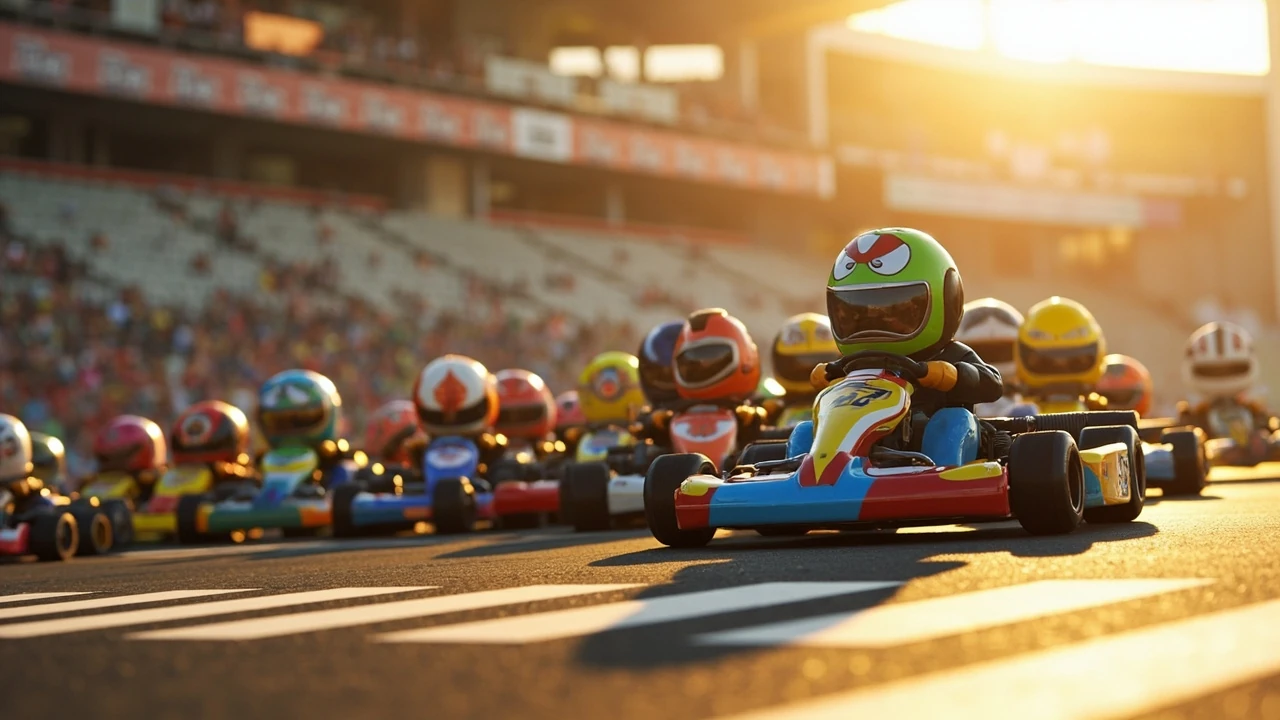
Mario Kart World characters: full roster, how to unlock, and outfit guide
Mario Kart World ships with the largest playable roster in the series, and the 50 total Mario Kart World characters are split across a familiar main cast, returning franchise favourites, and a sizeable group of NPC drivers that must be unlocked through play. The roster sits above the 48-driver mark set by Mario Kart 8 Deluxe and its Booster Course Pass, which alone makes a guide to the cast useful for completionists and casual racers who simply want to know what is available from the start and what they will need to chase. Outfits return from Mario Kart Tour and add a second layer of progression that is easy to miss if you only look at the main select screen.
This page focuses on three things: the structure of the roster, the practical steps to unlock the NPC drivers using the Kamek item, and the way Dash Food drives the alternate costume system. It is written for a player who already knows how to drive and now wants to fill out the roster, plan outfit farming routes, and understand the design intent behind the unlock systems. If you only care about which characters come with the game, the roster table below covers that quickly. The rest of the article goes deeper into the unlock mechanics and the outfit rules that govern the second pass through the cast.
The full Mario Kart World character roster at a glance
The roster is organised in two layers. The first layer is the 24 main racers, which are the franchise-staple characters that appear in promotional material, on the character select screen, and across the main Grand Prix cups. The second layer is 26 additional drivers, made up of the rest of the named cast plus a long list of NPC enemies, items, and background characters. Some of those 26 start unlocked, while others have to be earned through the Kamek transform mechanic. Outfits apply to the main 24 only, so the costume system is essentially a second progression track layered on top of the main roster.
It helps to think of the cast in three buckets:
- Main racers, each with an outfit track that can produce multiple alternate costumes.
- Returning franchise characters who start in the roster and do not have alternate outfits.
- NPC drivers, some unlocked from the start and others earned through play.
That mental model lines up with how the game presents the cast and how the unlock systems are layered, and it is the same structure the rest of this guide uses.
Main racers and their outfit counts
The 24 main racers are the characters you select from the standard character grid. They each receive a set of alternate outfits, with the size of the set depending on how heavily the character features in the game’s promotional and story content. The total number of outfits across the main cast is 103, and most of them are tied to specific Dash Food types and a few specific regions of the map. The table below groups the main racers by the size of their outfit set, which is the most useful lens for a player deciding who to prioritise when farming costumes.
| Main racer group | Outfit count per character | Total outfits in group | Progression note |
|---|---|---|---|
| Heavy hitters (Mario, Luigi, Peach, Yoshi, Donkey Kong, Toad, Bowser, Rosalina and similar marquee characters) | Up to 9 outfits each | Largest single share of the 103 total | Best targets for early outfit farming because the food that unlocks them spawns in many regions. |
| Mid-tier main cast (Wario, Waluigi, Daisy, Koopa Troopa, Koopa Paratroopa, and similar drivers) | 3 to 5 outfits each | Moderate share | Most can be unlocked with general-purpose foods such as the hamburger Touring set. |
| Lower-tier main cast (Pauline, a small number of newer or niche characters) | 1 alternate costume | Smallest share | Worth grabbing during a single pass through the relevant Dash Food region. |
The takeaway from the table is that the outfit grind is front-loaded onto a handful of marquee characters. If you are not interested in 100 percent completion, prioritising the heavy hitters is the fastest way to get the visual variety the outfit system is built around. If you are completionist, expect the 103 total to be the real number to chase, because the roster itself only takes 18 unlocks once you include the NPC drivers.
NPC drivers, the Kamek item, and the 18 unlock slots
The non-playable character roster is what turns a normal Mario Kart session into a long-term progression goal. There are 11 NPC drivers that need to be unlocked, on top of the 14 NPC drivers that are available from the start. Combined with the 24 main racers, that produces the headline 50-character total. The number a completionist actually has to chase is 18: the 7 main racers that begin locked and the 11 NPC drivers. The remaining 32 are already in the roster when you start a new save.
Unlocking NPC drivers revolves around a single new item: Kamek. When an opponent uses Kamek on a racer ahead of them, that racer is transformed into an NPC driver for the rest of the race, and if the NPC is one you have not yet unlocked, the character is added to your permanent roster. The character you become tends to be drawn from the NPCs already present on that course or in that biome, so the unlock is location-sensitive rather than purely random.
The Kamek system has three important constraints to internalise before you start farming:
- The user of the Kamek item does not transform. Only the racers in front of the user can become the new character.
- The Kamek item is rare, and on the launch version of the game many players went through long stretches of races without ever seeing it appear.
- Some NPC characters are biome-specific, so a character that appears in a haunted course will not appear on a desert track, even with Kamek active.
These three rules are the reason the 11 NPC unlocks feel like a grind without assistance. They are also the reason the version 1.40 update changed the practical experience of completing the roster.
Best track to unlock Mario Kart World characters fast
The fastest method to fill out the NPC roster no longer relies on racing for hours and hoping for a rare Kamek drop. The version 1.40 update added a custom item selection option to VS mode, and that option is the single most important change for anyone hunting Mario Kart World characters. With custom items, you can disable every item except for Kamek, which effectively turns every race into a Kamek lottery where one of the items is guaranteed to appear.
The practical steps look like this:
- Open VS mode and start a race with the custom item ruleset.
- Disable every item except for Kamek. The selection screen lets you toggle items individually.
- Pick a course whose biome matches the NPC you still need. The course list in the next section is built around this step.
- Race aggressively, stay near the front, and try to be ahead of any opponent who picks up a Kamek. The item only affects drivers in front of the user.
- If two players are available, have the second player also disable all items except Kamek and try to be ahead of you, so one of you is almost always in the transform zone.
With both players running Kamek-only custom items, the source guide reports that all 11 NPC characters can be unlocked in roughly seven to eight races. That estimate is for two coordinated players picking courses that match the remaining unlocks. A solo player can still expect a substantial speedup over the launch-era grind, because every item box in the race now contains the only item that matters for progression.
There is one cosmetic catch. The races are chaotic, because Kamek is the only offensive item in the box pool, so the field turns into a chain of mid-race transformations. For progression this is ideal, but for actual race practice you will want to switch back to the standard item ruleset after the roster is complete.
Where to race for each NPC unlock
Because Kamek transforms you into an NPC that is already on the course, the unlock is biome-driven. Racing on a course that does not contain the NPC you need will still produce unlocks for the NPCs that course does contain, but you will leave gaps in your roster. The list below pairs each NPC with a course family where that character tends to appear, based on the spawn patterns the source documents.
| NPC driver | Biome or course family | Why it works |
|---|---|---|
| Cataquack | Beach and seaside courses | Appears as an environmental obstacle on coastal tracks. |
| Chargin’ Chuck | Stadium and city courses | Common on the paved sections of urban Grand Prix cups. |
| Coin Coffer | Treasure-themed courses | Spawns in coin-dense areas that match its visual identity. |
| Conkdor | Sky and high-altitude courses | Appears on elevated sections where birds would plausibly perch. |
| Dolphin | Open ocean and water-heavy courses | Appears near water hazards and shoreline jumps. |
| Fish Bone | Underwater and submerged courses | Part of the deep-water obstacle set, including haunted water zones. |
| Peepa | Haunted and ghost-themed courses | Spawns in graveyards, mansions, and ghost house variants. |
| Pianta | Tropical and resort courses | Appears on beaches and resort islands that match its home setting. |
| Rocky Wrench | Construction and industrial courses | Spawns in construction yards, scaffolding zones, and dock areas. |
| Spike | Desert and rocky courses | Spawns in arid biomes where its cactoid form fits the landscape. |
| Swoop | Sky and high-altitude courses | Often shares airspace with Conkdor, so the same races can fill both unlocks. |
Reading the table as a route list, you can chain the unlocks into a short set of races. A haunted course gives you Peepa, a desert course gives you Spike, a construction zone gives you Rocky Wrench, and a water-heavy course covers both Fish Bone and Dolphin. Because Sky and high-altitude courses carry Conkdor and Swoop in the same airspace, that single biome can often knock out two unlocks in one run. Running Kamek-only custom items over a focused course set is what turns the eight-race estimate from the source into a realistic player experience.
How the Kamek unlock actually works in a race
Once you understand the item and the spawn rules, the in-race execution is the next thing to internalise. The transform happens the moment the Kamek item is used and resolves against the racer closest to the user but still in front of them. The new character is whatever NPC happens to be active on the course at that point, and the affected player keeps driving the rest of the race as that NPC. If the NPC is one you have not unlocked, the new character is added to your roster even if you finish last in that race.
Two further details matter for efficient farming:
- If you are the player who picks up Kamek and use it, you do not transform. To benefit from your own item, you need another driver ahead of you, which is where two-player coordination pays off.
- The transform overrides the current character, so an in-progress race can leave you controlling something that is not on the standard select screen until the checkered flag.
For a solo player, the practical goal is to be near the front of the pack when the Kamek appears, then stay ahead of the user. With custom items, the user of the Kamek is essentially guaranteed to be somewhere in the field every race, so the main variable is positioning rather than item luck.
Launch-era unlock method and why it was rough
Before the 1.40 update, the only way to unlock NPC drivers was to play normally and hope a Kamek item appeared. The source documents the original method in detail so that the improvement can be measured against it. The legacy approach combined a rare item, biome dependency, position dependency, and no way to influence the drop pool. Players reported going many races without ever seeing a Kamek, and even when one appeared, the affected character was determined by the NPCs already present in the local environment, not by player choice.
The legacy method was not impossible. It was simply a long, frustration-heavy grind. Two-player workarounds, including specific item spam patterns and shared controller strategies, were the only way to compress the timeline, and even those relied on the same Kamek rarity. The 1.40 update essentially turns the unlock system from a long passive grind into a short, intentional farming session, which is the most important design change for completionists in the first wave of patches.
Outfit system and how Dash Food drives costumes
Outfits are a separate progression track layered on top of the character roster. They are unlocked by collecting and consuming Dash Food, the consumable items you find on the world map. Each piece of Dash Food transforms you into an alternate costume for the duration of its effect, and if that costume is one you have not yet unlocked, it is added to your wardrobe. The food-to-costume mapping is what makes outfit farming predictable, because the same food type tends to produce costumes from the same named category.
The costume categories are organised around a few named archetypes:
- Touring outfits, usually produced by a hamburger or a similar general-purpose food.
- Theme-specific outfits tied to a region, like pirate, explorer, or racing-suit sets.
- Seasonal or event outfits that appear only when the relevant food is consumed in the matching biome.
The most useful pattern to know is that several costumes within a single category can be unlocked from the same general food type. That means a single food run in the right biome can fill out most of a named category in one pass, which is how the source describes the 103 total being reachable without separate expeditions for every individual costume.
Where to farm outfits efficiently
Outfit farming is best approached as a route-planning problem. The map is large, and the same food type spawns in many regions, but the highest-density spawns tend to be near landmarks, food stalls, and tourist points. A practical outfit-farming loop looks like this:
- Pick a costume category you want to fill out, for example the Touring set or the explorer set.
- Identify the food type that produces that category, such as a hamburger for Touring.
- Pick a biome where that food spawns most reliably and where you can complete a tight loop quickly.
- Drive the loop, eat the food as soon as you pick it up to trigger the costume check, and rerun the loop until the wardrobe stops adding new entries.
- Once the category is filled, move to the next food type and the next biome.
Because some food types are influenced by the surrounding area, the same hamburger can produce different categories in different biomes, so the route itself is part of the unlock. The source notes that it tests multiple locations to find the best spots for multi-costume sessions, which is a hint that the optimal farming location is a per-category decision rather than a single map pin.
Main racers that need to be unlocked
Not all 24 main racers are available from the start. Seven of them have unlock conditions, and they are tied to the Grand Prix cups rather than to the Kamek item. Winning a specific cup, or completing a specific set of cups, adds the relevant main racer to your roster. The exact set of locked main racers is small enough that a single focused session on the cups is enough to clear them, unlike the NPC unlocks that benefit from a dedicated farming route.
The practical advice is straightforward. If you are working through Grand Prix anyway, the unlock conditions are essentially free. If you only care about the roster and not the cups, you can use lower-difficulty cups to clear the unlock conditions with minimal grinding. The Grand Prix mode is also a good way to learn the courses that the NPC farming section uses, so a natural order is to clear the cups first and then move into VS mode with the custom item ruleset.
How the roster is presented in the character select screen
The character select screen reflects the three-bucket structure of the roster, which makes it a useful map for tracking progress. Main racers occupy the primary grid, with their alternate outfits nested under each character rather than shown as separate entries. The returning franchise characters who start unlocked sit alongside the main racers. The NPC drivers live in their own group, with a visible lock icon until they are unlocked.
Two practical implications follow from this layout:
- Your roster completion percentage is driven by the NPC group, not the main racer group, because most main racers are unlocked from the start.
- Outfit progress is tracked separately from the roster itself, because outfits apply to main racers only and have their own unlock state.
That separation is why the source’s completion number is 18 total unlocks to reach the 50-character roster, plus 103 outfit unlocks on top of that. The two systems are intentionally independent, and a player who wants to clear both is essentially running two progression tracks in parallel.
Reading Mario Kart World characters as a design system
Stepping back from the unlock mechanics, the design of the roster tells a story about how the team thought about progression. The 50-character ceiling is a marketing headline, but the real number to chase is the 18 unlocks. The outfit count of 103 is the second headline, but the real number is the per-character outfit set, which ranges from 1 to 9. The Kamek system is a single-item design that links the roster, the items, and the world geometry together in one mechanic, which is why the 1.40 custom-item update was such a meaningful change for completionists.
For a player who only races casually, the roster is large enough that you can pick favourites and never touch the NPC unlocks. For a player who wants to see everything, the 1.40 update made the NPC unlocks a short, deterministic farm rather than a long passive grind. The outfit system is the slowest layer, because it is built around map traversal and food collection rather than race results, so it is the section of the progression that benefits most from a planned route.
Frequently asked questions
How many Mario Kart World characters are there in total?
There are 50 playable Mario Kart World characters in total, the largest roster in the series. The total includes 24 main racers, a set of returning franchise characters, and a long list of NPC drivers, some of which need to be unlocked before they can be selected.
How many characters do you actually need to unlock?
A new save starts with 32 of the 50 characters already unlocked. The remaining 18 need to be earned: 7 main racers through the Grand Prix cups and 11 NPC drivers through the Kamek item. Outfits are tracked separately, with 103 costumes on top of the 50-character roster.
What is the Kamek item and how does it unlock characters?
Kamek is a new item in Mario Kart World. When an opponent uses it, every racer in front of the user is transformed into an NPC driver for the rest of the race, and any new NPC reached in this way is added to your permanent roster. The user of the item does not transform.
What is the fastest way to unlock all NPC drivers?
After the 1.40 update, the fastest method is to enter VS mode, select custom items, disable every item except Kamek, and race on courses whose biome matches the NPC you still need. With two coordinated players running the same ruleset, all 11 NPC drivers can be unlocked in roughly seven to eight races.
Do you need two players to unlock NPC drivers quickly?
No, but it helps. With one player and Kamek-only custom items, the unlock is still much faster than the launch-era grind because Kamek is guaranteed to appear. Two players simply increase the chance that one of them is ahead of the Kamek user when the item resolves.
Where do you find the outfit system in Mario Kart World?
Outfits are unlocked through Dash Food, the consumable food items scattered around the world map. Eating a piece of Dash Food transforms you into an alternate costume for the duration of the effect, and if that costume is new it is added to your wardrobe. Most outfits are tied to a specific food type and sometimes to a specific biome.
How many outfits are there in Mario Kart World?
There are 103 outfits in Mario Kart World across the 24 main racers. Some main characters, such as Mario, have as many as 9 alternate costumes, while others have a single alternate. Returning franchise characters and NPC drivers do not have alternate outfits.
Can you unlock every NPC driver in any track?
Not always. Because the Kamek transform resolves into the NPCs already present on the course, biome-specific characters will only appear on the tracks where those NPCs normally spawn. Racing on a course that does not contain the NPC you need will still unlock other NPCs but will leave gaps in your roster.
Do online races count for NPC unlocks?
Yes. NPC unlocks work the same way online as they do in local play, because the Kamek transform and the resulting roster addition are based on the race itself, not on the connection type. The custom-item VS ruleset used for fast farming is a local or online mode depending on how the room is configured.
Are there more characters planned in future updates?
No additional characters have been confirmed beyond the 50 already in the base game. Any future additions would depend on official announcements from Nintendo and would be reflected in the version notes rather than in this guide.
Leave a Reply