
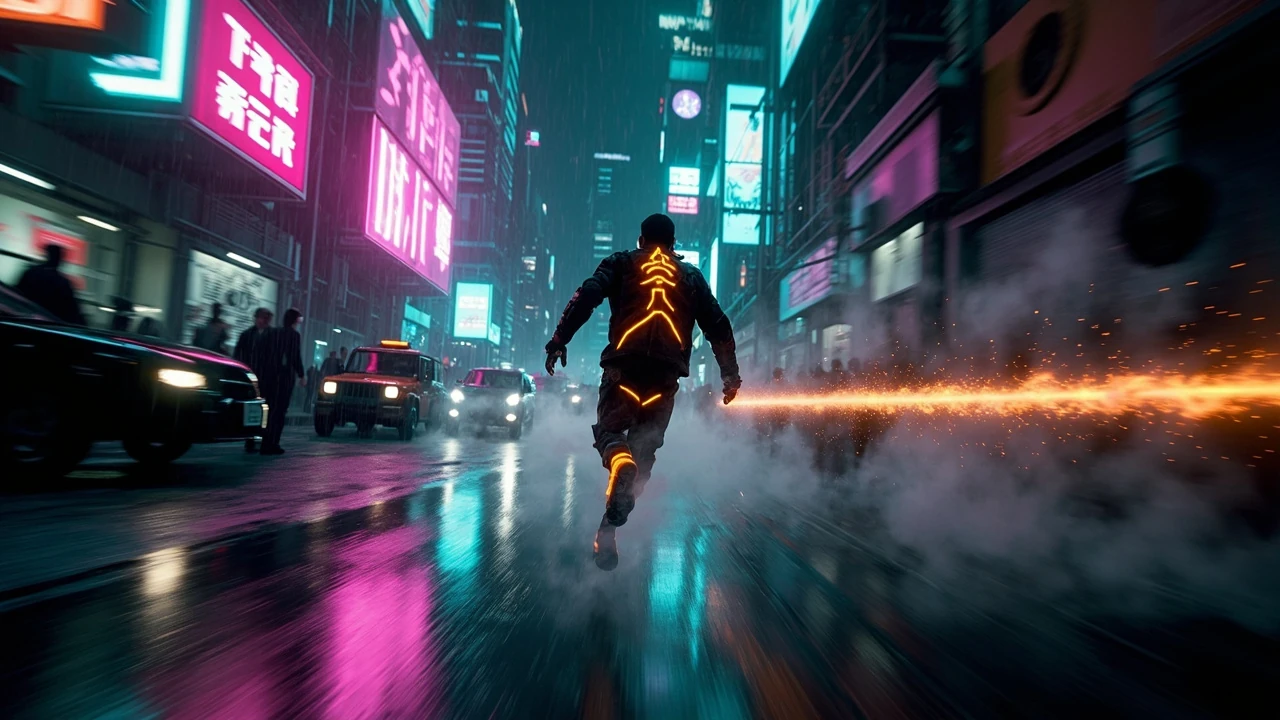
Sandevistan Cyberpunk 2077: the operating system that turns the player into a one-person kill corridor
Anyone who has spent more than a few hours in Night City eventually hits the same question: should a build run a Sandevistan, a Berserk core, or a quickhack suite, and what does the Sandevistan actually change about moment-to-moment combat? The sandevistan cyberpunk 2077 community reference point is the Operating System cyberware that David Martinez uses in the Netflix anime Cyberpunk Edgerunners, and CD Projekt RED shipped a functional version of that cyberware into the base game through the Edgerunners update. At its core, a Sandevistan is a piece of Operating System cyberware that briefly slows the simulation for everyone except the user, opening a window in which the player can close distance, line up headshots, or finish a vulnerable enemy before the world catches up.
This guide is written for players and build-curious designers who want a clear picture of how a Sandevistan behaves under the hood, how it compares with the other OS cyberware families, and where to actually obtain one without burning eddies on the wrong tier. It also covers the design-side questions a modder or systems designer might ask, because the same mechanics that make a Sandevistan feel cinematic in a session are the mechanics that constrain it in a build calculator.
What a Sandevistan actually does in Cyberpunk 2077
A Sandevistan is an Operating System implant, not a weapon. It occupies one of the limited OS cyberware slots in the character sheet and only activates when the player triggers it, the same way a Berserk core or a cyberdeck suite is triggered. When active, the implant changes the local time scale for a short window, with the exact slow percentage, duration, and cooldown depending on the tier of Sandevistan the player has equipped.
Mechanically, the effect is a local time-dilation buff applied to the player character. Enemies, projectiles, vehicles, and most scripted events appear to move at a reduced speed, while the player’s own animations, gunplay, and melee swings still resolve at normal speed. The result is not literal bullet time: the simulation does not stop, and enemies can still fire, track, and die during the window, but the player has a much wider margin to act inside that window.
The duration, slow percentage, and cooldown are written into the cyberware stat card. The slow factor is multiplicative with the player’s existing movement speed, so a Sandevistan used during a sprint or dash is one of the strongest repositioning tools in the game, especially for melee characters who need to enter and exit a fight on their own terms.
How time-slow interacts with the rest of the combat loop
The Sandevistan does not exist in isolation. It sits on top of a few other Cyberpunk 2077 systems, and the way those systems stack is the difference between a build that feels broken and a build that feels average.
- Cyberware capacity: every Sandevistan has a capacity cost, and the player can only equip OS cyberware up to the capacity provided by their skeleton and nervous system cyberware. Higher-tier Sandevistans tend to cost more, so a player chasing the strongest effect often has to invest capacity points first.
- Cooldown stacking: the duration of the slow and the cooldown of the ability are separate stats. A Sandevistan with a 9-second slow and a 40-second cooldown gives a different rhythm than one with a 6-second slow and a 25-second cooldown, and the right pick depends on the build’s preferred engagement length.
- Cold Blood and Adreno-active: perks in the Cold Blood tree, as well as the Adreno-active consumable, can reset or reduce Sandevistan cooldowns when the player scores kills during the active window. For aggressive players this turns the ability from a periodic tool into a chain that can fire again as soon as the previous window ends.
- Optical and nervous cyberware: perks that reduce recoil, increase crit chance, or speed up aim-down-sights all benefit from the slow window because the player has more frame time to land accurate shots. This is why a Sandevistan is often the centerpiece of a glass-cannon ranged build rather than a tank build.
From a design perspective, the Sandevistan is the most explicit example in Cyberpunk 2077 of a “moment of superiority” ability: a short, player-controlled spike in power that asks the player to use it well, then forces them back into the normal risk curve until the cooldown ends.
Sandevistan vs other Operating System cyberware
The Operating System slot has three competing families, and the choice between them defines a build’s identity at the level of cyberware. The table below compares them on the dimensions that actually matter when the player is choosing an OS at a vendor or ripperdoc.
| Operating System | Primary effect | Best fit for | Notable trade-off |
|---|---|---|---|
| Sandevistan | Time-slow for the player, with a fixed duration and cooldown | Glass-cannon ranged, fast melee, midair combat | Cooldown gating means downtime windows where the build is vulnerable |
| Berserk core | Damage resistance and damage bonus while active | Close-range tank builds, high-health solo play | No repositioning tool; relies on surviving the in-fight window |
| Cyberdeck suite | Quickhack spreading, RAM management, and contagion effects | Netrunner builds, control-focused play, supporting a team | Less raw damage; needs uploaded quickhacks and a connected target |
Where a Sandevistan stands out is in the player’s ability to control the pace of an engagement. A Berserk core asks the player to weather an incoming storm; a cyberdeck asks the player to set up conditions and apply quickhacks; a Sandevistan asks the player to enter the fight on their own clock and decide when the fight really starts. That is the design reason a Sandevistan is the OS most often picked by players who describe their character as a “solo,” an edgerunner, or a NetWatch-style operative.
Starter, mid, and endgame Sandevistans
Not every Sandevistan in the game is equal, and the right pick changes as the player levels and earns Street Cred. The community’s go-to reference for the practical differences between individual Sandevistans is the IGN wiki page on Sandevistan locations and stats, which keeps an updated list of every available tier and the build role it fits. The table below summarises the broad pattern most players will see as they progress through the game.
| Tier | Example Sandevistans | Capacity cost | Typical effect | Where it usually comes from |
|---|---|---|---|---|
| Starter | Dynalar Sandevistan | Around 18 cyberware capacity | Moderate time-slow, modest crit bonuses, long cooldown | High Street Cred ripperdocs, very late-game vendor unlocks |
| Mid tier | Zetatech Sandevistan, QianT “Warp Dancer” | 14-18 cyberware capacity | Stronger slow factors, situational bonuses such as midair or movement bonuses, cooldowns in the 45-60 second range | Ripperdocs at high Street Cred, specific side jobs, loot drops from elite enemies |
| Endgame | Arasaka, QianT “Warp Dancer” Mk.4, Apogee | Higher capacity, more demanding | The strongest slow factors and the shortest relative cooldowns in the game | Iconic drops, Phantom Liberty content, late-game vendors |
The Dynalar Sandevistan, for example, is one of the three starter-level Sandevistans in the game, slows time by around 50 percent for 9 seconds on a 40-second cooldown, and adds a flat bonus to both crit chance and crit damage. It costs a fraction of what the high-end Sandevistans run, which is why ripperdocs list it as an accessible entry point for players who are still raising their Street Cred. The QianT “Warp Dancer,” by contrast, used to be the strongest Sandevistan in the game before a balance pass reduced its overall power, leaving it with a longer cooldown and a more defensive stat profile. Players who try to plan around either of these as the centerpiece of a build should expect very different engagement rhythms.
The exact balance numbers shift with patches, which is why a Sandevistan-focused build should always be checked against the current patch notes rather than a build guide from launch week. The shape of the system, however, has been stable since the Edgerunners update, and most of the named Sandevistans still appear in the same vendor and mission slots they did when the update shipped.
How to unlock your first Sandevistan
The Sandevistan is a high-level OS, and Cyberpunk 2077 gates most of the lineup behind Street Cred and specific ripperdoc unlocks. Players who try to buy one in the first act of the main story will find that the relevant vendors either do not list Sandevistans yet or require a Street Cred rank the player has not reached.
- Push the main story through Act 2 and into Act 3. The Voodoo Boys and Arasaka arcs open up the parts of Night City where the higher-tier ripperdocs operate, and several of those ripperdocs only stock Sandevistans after the relevant story milestones.
- Raise Street Cred to 50 or higher. Many Sandevistans, including the Dynalar, are gated behind Street Cred 50, which means the player needs to finish a meaningful number of side gigs, NCPD scanner hustles, and tiered gigs before the vendor even shows the item.
- Visit ripperdocs in West Wind Estate, Japantown, Northside, and the Badlands. These are the ripperdocs most likely to carry Sandevistans, and the inventory rotates with player level and Street Cred, so visiting a doctor the player has used before can be worthwhile.
- Check iconic drop sources. The strongest Sandevistans are usually iconic items, which means they come from specific scripted encounters rather than from a vendor. A guide focused on the right enemy, mission, or Phantom Liberty faction will save the player a lot of vendor scrolling.
- Respec cyberware capacity if needed. The first time the player tries to equip their first Sandevistan, they may find that capacity is the actual blocker. Investing in a skeleton cyberware or a nervous system cyberware that raises total capacity is a prerequisite, not an optional step.
Players who want the Sandevistan in time for the late-game assault on Arasaka Tower usually unlock their first usable OS through the Phantom Liberty expansion content, where the Dogtown ripperdocs often carry iconic Sandevistans that match the level curve. The expansion also rebalances several existing Sandevistans, so a player who already has one of the pre-expansion models may find that a newer version is worth chasing.
Building around a Sandevistan
A Sandevistan is a multiplier, not a foundation. The implant magnifies whatever the build is already good at, so the right supporting perks, attributes, and weapons matter as much as the OS choice itself. The mistake most first-time Sandevistan users make is to treat the implant as a standalone power-up and to leave the rest of the build on autopilot, when in practice the supporting tree is what turns a 9-second window into a fight-ending chain.
Attributes and perks that benefit a Sandevistan build
- Cool attribute, especially the Cold Blood tree, because Cold Blood ranks and Adreno-active stacks can be triggered during the slow window and frequently refund a chunk of cooldown or stack crit chance.
- Reflexes for a katana or pistol build, since both weapon families rely on speed and the slow window is most useful when the player can chain fast follow-up swings or shots.
- Perks in the Athletics tree that boost movement speed and air control, which combine with the time-slow to give the player a generous midair combat window. The Zetatech Sandevistan in particular is built around this use case, with a stronger slow factor when activated while airborne.
- Optical cyberware with crit chance, headshot damage, or thermal scopes, because the slow window gives the player the frame time to use those otherwise risky aiming perks.
- Perks that reduce aim-down-sights time, because the slow window is short enough that the ADS animation alone can eat a meaningful slice of it on heavier weapons.
Weapons that pair well with a Sandevistan
- High-rate-of-fire pistols and smart pistols, which can lay down a large volume of accurate shots during the slow window without a recoil-heavy two-handed weapon.
- Iconic precision rifles with built-in headshot multipliers, where the slow window lets the player chain multiple headshots before the enemy can break line of sight.
- Light-weight melee weapons, especially katanas and mantis blades, because the slow window lines up with the fast swing animations of those weapons and lets the player enter, swing, and exit cleanly.
- Thrown weapons and single-shot iconic sidearms, which benefit from the player being able to line up each shot deliberately during the slow window instead of rushing the trigger.
For a first attempt at a Sandevistan build, the simplest recipe is a Sandevistan in the OS slot, a Cool-leaning stat spread with Cold Blood perks, and a high-rate-of-fire weapon the player already enjoys. That trio gives the player a working version of the David Martinez fantasy from Edgerunners without forcing them into a specific weapon archetype, and it scales reasonably well when the player replaces the starter Sandevistan with a stronger tier later on.
Common mistakes when running a Sandevistan
Most complaints about the Sandevistan come from the same few mistakes, and they are worth naming because they are easy to avoid once the player knows what to look for. The pattern is usually the same: a player sees the cinematic slow effect on a stream or in a clip, equips the implant, and then finds that the in-game experience does not match the trailer.
- Activating it during a cutscene, a scripted takedown, or a quickhack animation, where the slow effect does not register and the cooldown still ticks down.
- Equipping a Sandevistan that costs more cyberware capacity than the player can support, which silently disables the OS without a clear error message.
- Ignoring the cooldown, then engaging a long fight as if the slow window were always available. The Sandevistan is a spike, not a passive buff, and a build that forgets the cooldown gets punished once the second wave arrives.
- Pairing it with weapons that have long reload animations or charge-up mechanics, which eat most of the slow window before the player can use it.
- Saving it for a boss fight and never using it in normal combat, which leaves the player under-trained on the timing and the visual cues of the slow effect.
- Forgetting that enemies can still die during the window, and that the cooldown only starts when the active duration ends, not when the first enemy falls.
Once the player learns the visual cue for an active Sandevistan and gets used to triggering it just before, rather than during, a firefight, the implant starts to feel like a real tempo tool rather than a panic button. The other habit that pays off quickly is to bind the activation to a comfortable key rather than the default layout, because the input has to come out fast and under stress.
Sandevistan in Phantom Liberty and current patches
The Phantom Liberty expansion added a small but important Sandevistan footprint in Dogtown, including iconic-tier Sandevistans that can compete with the strongest pre-expansion options. Because those items are tied to specific Phantom Liberty missions, the safest way to plan around them is to use a maintained Sandevistan location guide rather than relying on a single walkthrough.
Balance changes since launch have also shifted specific Sandevistans between tiers. The QianT “Warp Dancer” Sandevistan, for example, lost its place as the strongest OS in the game after a balance pass and now sits in a more defensive role with a longer cooldown, which means older build guides that recommend it as a top pick need to be re-checked against the current patch before the player commits capacity to it. The Zetatech Sandevistan, in contrast, has been treated as a more specialised option throughout, since its slow factor is more useful in midair than on the ground, and it shows up at the same Street Cred 20 bracket as the other level-20 OS options.
Patch cycles also tend to adjust the cost of named Sandevistans, the wording of their tooltip effects, and occasionally the trigger conditions for the slow window itself. Players who have not revisited their Sandevistan pick in a few patches should treat their current loadout as a working hypothesis rather than a final answer, and the maintained reference pages for the sandevistan cyberpunk 2077 system are a more reliable baseline than a single creator’s video guide.
How a Sandevistan compares with iconic alternatives
For players who already have access to iconic-tier cyberware, the Sandevistan decision often comes down to a small set of named items rather than the whole list. The table below gives a general sense of the trade-off, with the caveat that exact numbers vary by patch.
| Item type | Role | Why a player might pick it over a Sandevistan | Why a player might still pick a Sandevistan |
|---|---|---|---|
| Berserk core (iconic) | Tank-style moment of superiority | Survivability and damage resistance are more reliable in prolonged fights | The Sandevistan is still better for repositioning and for builds that need frame time rather than raw health |
| Cyberdeck (iconic) | Quickhack spread and control | Stronger against grouped enemies and turrets; gives utility to a team | Solo damage and one-shot potential still favour a Sandevistan plus precision weapon |
| Cyberware that grants unique passive effects | Constant small bonuses | Always-on value for hybrid builds that do not want a gated cooldown | For pure spike damage, a Sandevistan plus a supporting Cold Blood tree still wins on peak DPS windows |
Most players who try all three families eventually settle on a Sandevistan for solo play and a cyberdeck for group play, because the two OS families cover different parts of the combat loop. The Berserk core tends to appeal to players who prefer a heavier, more deliberate playstyle, and it is the easiest of the three to learn because the active window is forgiving about positioning and timing.
Design-side notes for modders and systems designers
For a modder or systems designer, the Sandevistan is one of the cleanest examples in the game of a short-window, cooldown-gated “ultimate” ability. A few of the design choices are worth pointing out, because they explain both why the Sandevistan feels cinematic and why it is balanced around long cooldowns.
- The slow factor is a multiplier, not a pause. The simulation keeps running, so enemies can still shoot, take damage, and die during the window, and the player cannot treat the world as paused.
- The duration and cooldown are separate stats. That separation lets designers ship two Sandevistans with the same slow factor but very different feel, and it gives the player a meaningful choice between “long burst, long wait” and “short burst, short wait.”
- The OS slot is shared. Putting a Sandevistan in the OS slot means the player is not running a Berserk core or a cyberdeck at the same time, which forces a real build trade-off rather than allowing every buff to stack.
- Cold Blood and Adreno-active both interact with the cooldown. That choice makes the Sandevistan reward aggressive play and punishes passive camping, which is a deliberate match for the edgerunner fantasy the Edgerunners update leaned into.
- Vendor gating ties the strongest Sandevistans to Street Cred rather than to player level, which keeps the implant feeling like a reward for engaging with the open world rather than a free pickup for main-story-only players.
For a custom mod or a similar system in a different game, the lesson is that a short, multiplicative, cooldown-gated “superiority” window needs two things to feel good: a clear visual cue the player can recognise under stress, and at least one off-cooldown path that lets the build keep working while it waits. Cyberpunk 2077 gives the player the cue through the slow effect itself, and the off-cooldown path is usually Cold Blood, optical cyberware, or a high-rate-of-fire weapon.
Sandevistan in PvP and high-difficulty playthroughs
Players who take Cyberpunk 2077 into the hardest difficulty settings, or who spend time in the more aggressive netrunner duels the community arranges, quickly find that the Sandevistan behaves differently than it does in a casual main-story run. The slow window is still generous, but enemy health pools and damage output scale up enough that the cooldown between activations becomes the actual limiting factor.
On the hardest settings, the common pattern is to use a Sandevistan to open a fight, then fall back on Cold Blood stacks and a secondary cyberware for the rest of the engagement. Players who try to use the Sandevistan as a primary damage source on the highest difficulty usually find that they burn through two or three windows per fight and run out of cooldowns before the last enemy falls, at which point the build is forced to rely on the slower, more conventional parts of its kit.
The other quirk worth knowing is that several boss encounters and scripted set pieces in the late game will partially resist or ignore the time-slow effect. A Sandevistan still gives the player more frame time than they would have without it, but a small number of high-tier enemies are coded to keep moving at near-normal speed, which is a deliberate balance choice to keep those fights from being trivialised by the implant.
Quick checklist before you commit to a Sandevistan build
- Confirm your cyberware capacity is high enough to fit the Sandevistan you actually want, not just the cheapest one.
- Pick a weapon archetype that benefits from a short window of high accuracy, not a slow or charge-based weapon.
- Invest at least a few points in Cold Blood so the slow window can chain into Adreno-active and refund some cooldown.
- Save before buying, especially for high-tier Sandevistans, because balance changes between patches can quickly invalidate a build.
- Practise the activation timing in a normal fight before relying on the Sandevistan in a boss or assault encounter.
- Keep a backup OS in mind for fights where the slow effect is partially resisted, so the build has an answer when the Sandevistan is not the right tool.
Frequently asked questions
What is a Sandevistan in Cyberpunk 2077?
A Sandevistan is an Operating System cyberware implant that briefly slows time for everyone except the player. The effect lasts a few seconds, has a fixed cooldown, and is the central combat tool of glass-cannon and fast-melee builds. It is the same class of cyberware used by David Martinez in the Cyberpunk Edgerunners anime.
Where do I get my first Sandevistan in Cyberpunk 2077?
The earliest reliable Sandevistans come from ripperdocs in West Wind Estate, Japantown, Northside, and the Badlands once the player has reached around Street Cred 50 and progressed into the late-game story. Iconic Sandevistans are usually tied to specific missions or Phantom Liberty content rather than vendors.
Is the Dynalar Sandevistan worth using?
The Dynalar Sandevistan is one of the starter-tier OS options and is a reasonable first Sandevistan. It slows time by around 50 percent for about 9 seconds on a 40-second cooldown and adds a crit chance and crit damage bonus, which makes it a solid fit for a Cool-leaning build before the player has access to iconic alternatives. Its main drawback is the high Street Cred gate and the relatively high capacity cost for the effect it delivers.
Why was the QianT “Warp Dancer” Sandevistan nerfed?
The QianT “Warp Dancer” Sandevistan used to be the strongest OS in the game, with the highest slow factor and a relatively forgiving cooldown. A balance pass reduced its overall power, lowered the slow factor, and extended the cooldown, leaving it in a more defensive role. Newer Sandevistans and iconic options have since taken its place at the top of most tier lists, and the change was partly designed to stop one implant from defining the entire meta.
Can I use a Sandevistan with a katana or mantis blade build?
Yes. A Sandevistan plus a fast melee weapon like a katana or mantis blades is one of the strongest combinations in the game, because the slow window lines up with the swing animations and lets the player enter, damage, and exit a fight before the enemy recovers. Reflexes and Cold Blood perks support this playstyle, and many players treat it as the default melee setup once they have the capacity for a mid-tier Sandevistan.
Does a Sandevistan work in Phantom Liberty?
Yes. Phantom Liberty adds new iconic Sandevistans, mostly in Dogtown, that compete with the strongest base-game options. The expansion does not replace the Sandevistan system; it expands the pool of available items within the same OS slot, and several of the new options are tuned for the higher enemy health pools in the expansion’s missions.
How much cyberware capacity does a Sandevistan need?
Capacity varies by tier. Starter Sandevistans usually sit around 14-18 cyberware capacity, while higher-tier and iconic Sandevistans can demand more. The player needs to invest in skeleton and nervous system cyberware that raises total capacity before the strongest Sandevistans become equippable, and a build that ignores capacity will often find its preferred OS greyed out at the ripperdoc screen.
Is a Sandevistan better than a Berserk core or cyberdeck?
It depends on the build. A Sandevistan is the strongest pick for glass-cannon ranged and fast-melee characters who want a spike in damage and repositioning. A Berserk core is better for tank builds that want survivability, and a cyberdeck is better for netrunner builds that want quickhack spread and control. They occupy the same OS slot, so a build can only pick one, and the right answer usually comes down to the weapon and perk tree the player wants to lean on.
Does the slow effect pause quickhacks and netrunner abilities?
No. Quickhacks that are already in flight when a Sandevistan activates still resolve at their own timing, and a netrunner who spreads a contagion or an overheat quickhack before activating the Sandevistan will see those effects continue to tick during the slow window. This is one reason experienced netrunners sometimes use a cyberdeck as the primary OS and a Sandevistan as a secondary tool in the supporting slot if the build allows it.
Leave a Reply